
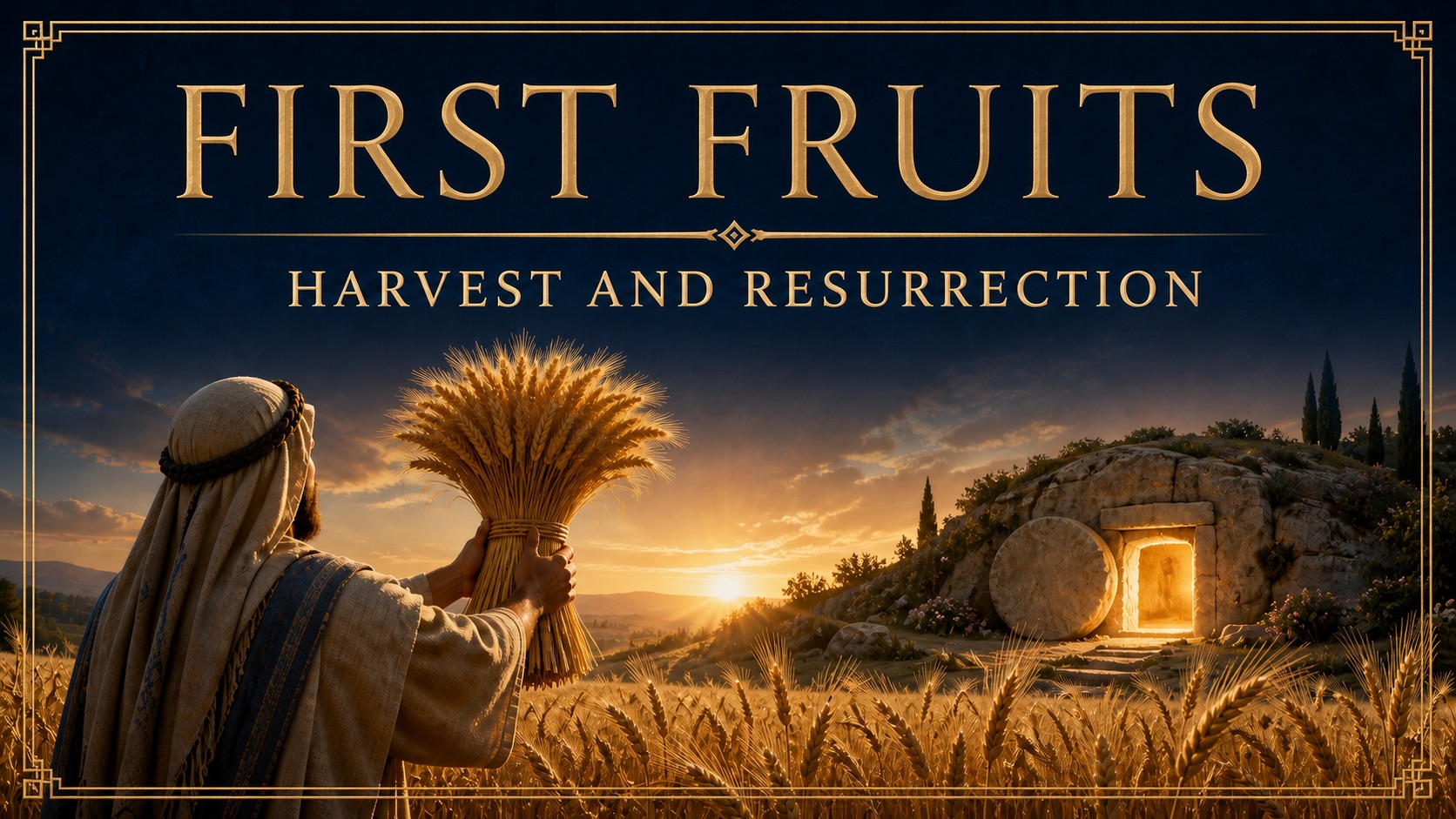
Today, according to the Scriptural calendar, marks a significant biblical day—the Day of First Fruits. Scripturally, this day falls on the 16th day of the month, precisely the first day of the week after the Sabbath following Passover. Remarkably, it is also the day Yahushua rose from the dead, becoming the “first fruits” of resurrection.
Biblical Significance of First Fruits
In Deuteronomy 26:1-4, 9-10, Yahuwah commands His people to offer the first fruits of their harvest:
“And it shall be, when you come into the land which Yahuwah your Elohim is giving you as an inheritance, and you possess it and dwell in it, that you shall take some of the first of all the produce of the ground, which you shall bring from your land that Yahuwah your Elohim is giving you, and put it in a basket and go to the place where Yahuwah your Elohim chooses to make His name abide.” (Deut. 26:1-2)
The historical record of this event is given in Joshua 5:10-12:
“Now the children of Israel camped in Gilgal, and kept the Passover on the fourteenth day of the month at twilight on the plains of Jericho. And they ate of the produce of the land on the day after the Passover (15th—a Sabbath), unleavened bread and parched grain, on the very same day. Then the manna ceased on the day after they had eaten the produce of the land (16th); and the children of Israel no longer had manna, but they ate the fruit of the land of Canaan that year.”
Yahushua and the Day of First Fruits
This historical and spiritual context is critical to understanding Yahushua’s resurrection. As Paul explains in 1 Corinthians 15:20-23:
“But now is Yahushua risen from the dead, and become the first fruits of them that slept. For since by man came death, by man came also the resurrection of the dead.”
This aligns perfectly with Leviticus 23:9-12, which commands the wave sheaf offering (first fruits) to be presented the day after the Sabbath following Passover, clearly identifying the day as the 16th:
“He shall wave the sheaf before Yahuwah so that you may be accepted; the priest shall wave it on the day after the Sabbath.”
Timeline of Yahushua’s Crucifixion and Resurrection
Understanding the timeline:
- 10th day: Yahushua enters Jerusalem (lamb selection, beginning of inspection).
- 11th-13th days: Yahushua is inspected and persecuted—three days and three nights.
- 14th day: Passover – Yahushua was crucified.
- 15th day: Sabbath – Yahushua rested in the tomb.
- 16th day: First Fruits – Yahushua rose from the dead.
The scriptures confirm this repeatedly. Luke 23:56 explicitly states that after preparing spices, the followers rested on the Sabbath, clearly marking the 15th as a day of rest.
Resolving the “Three Days and Three Nights” Misunderstanding
Confusion arises from Matthew 12:40:
“For as Jonas was three days and three nights in the whale’s belly; so shall the Son of man be three days and three nights in the heart of the earth.”
The term “heart of the earth” is not about being buried underground. In Hebraic idiom, it can mean being handed over to the authority of man, the dominion of sin, or the realm of darkness. From the moment Yahushua is betrayed by Judas, bound, and handed over, He is placed under the dominion of earthly rulers—those representing darkness. This fits exactly with His statement in Luke 22:53:
“But this is your hour, and the power of darkness.”
To correctly interpret this, we must understand the Jewish idiom “heart of the earth,” referring specifically to Jerusalem—the center of persecution and trial. The lamb selected on the 10th day was inspected for three days and nights to ensure it had no blemish (Exodus 12:3-6). Similarly, Yahushua was inspected, interrogated, and persecuted by the religious authorities from the 11th to the 13th day, fulfilling this prophecy precisely.
Multiple scriptures (Matthew 16:21, Mark 9:31, Luke 24:7, etc.) consistently state Yahushua would rise on the third day—not after the third day. The “three days and nights” prophecy was given specifically to the wicked who persecuted Him, marking the period of His persecution in Jerusalem, the “heart of the earth.” Be wary of those who tell you it represents His death and resurrection as it is not from Him.
Significance for Today

Today is a day to celebrate Yahushua, our risen Savior, who became the first fruits of resurrection, promising eternal life to all who follow Him. It’s a day Yahuwah ordained from ancient times to foreshadow the ultimate redemption and restoration available through Yahushua.
1 Now when the Sabbath was past, Mary Magdalene, Mary the mother of James, and Salome bought spices, that they might come and anoint Him. 2 Very early in the morning, on the first day of the week, they came to the tomb when the sun had risen. 3 And they said among themselves, “Who will roll away the stone from the door of the tomb for us?” 4 But when they looked up, they saw that the stone had been rolled away—for it was very large. 5 And entering the tomb, they saw a young man clothed in a long white robe sitting on the right side; and they were alarmed.
6 But he said to them, “Do not be alarmed. You seek Yashua of Nazareth, who was crucified. He is risen! He is not here. See the place where they laid Him. 7 But go, tell His disciples—and Peter—that He is going before you into Galilee; there you will see Him, as He said to you.”
May we discard traditions of men, such as Easter, and return to observing the days Yahuwah Himself set apart—Passover, Unleavened Bread, and First Fruits. As Exodus 12:14 says:
“This day shall be to you a remembrance; and you shall keep it as an appointed time to Yahuwah throughout your generations.”
Let us honour Yahuwah’s appointments, remembering the profound significance embedded in His calendar and the Messiah’s fulfillment of prophecy.


Leave a Reply