
The Day of Atonement is one of the most solemn appointed times in Scripture.
It is a day connected with cleansing, repentance, humility, priestly ministry, separation, and the removal of sin.
When we compare the Day of Atonement with the judgment scenes found in Daniel, Hebrews, Isaiah, Matthew, and Revelation, a remarkable pattern begins to emerge.
The Day of Atonement was not merely an ancient ceremonial observance.
It presents a picture of something far greater.
It reveals how Yahuwah deals with sin, how His people are called to humble themselves before Him, and how judgment ultimately results in the separation of righteousness from wickedness and the final removal of sin.
The Day of Atonement Was a Day of Cleansing
The purpose of the Day of Atonement is stated plainly:
Leviticus 16:30
“For on that day shall the priest make an atonement for you, to cleanse you, that ye may be clean from all your sins before Yahuwah.”
This was not simply another day of sacrifice.
The emphasis was on cleansing.
The sanctuary itself was cleansed because of the sins of Israel:
Leviticus 16:16
“And he shall make an atonement for the holy place, because of the uncleanness of the children of Israel, and because of their transgressions in all their sins…”
So the Day of Atonement dealt with:
- sin,
- defilement,
- cleansing,
- the sanctuary,
- and the standing of Yahuwah’s people before Him.
Already, we begin to see themes that later appear in the biblical judgment.
Afflict Your Souls
Yahuwah gave a very specific command concerning the Day of Atonement:
Leviticus 23:27
“Also on the tenth day of this seventh month there shall be a day of atonement: it shall be an holy convocation unto you; and ye shall afflict your souls…”
The people were not simply told to attend a ceremony.
They were told to afflict their souls.
This speaks of humility, repentance, self-examination, and seriousness before Yahuwah.
The warning that followed was severe:
Leviticus 23:29
“For whatsoever soul it be that shall not be afflicted in that same day, he shall be cut off from among his people.”
There was therefore a distinction being made.
Those who humbled themselves before Yahuwah remained among His people.
Those who refused were cut off.
That is already a form of judgment.
There is examination.
There is accountability.
There is separation.
What Does It Mean to Afflict the Soul?
This is where Isaiah 58 becomes extremely important.
The people of Isaiah’s day believed they were humbling themselves before Yahuwah.
They said:
Isaiah 58:3
“Wherefore have we fasted, say they, and thou seest not? wherefore have we afflicted our soul, and thou takest no knowledge?”
Notice the language:
“Afflicted our soul.”
That is the same kind of language associated with the Day of Atonement.
But Yahuwah was not impressed merely because they were fasting.
Why?
Because their outward religious observance was not matched by righteousness in the way they lived.
He says:
Isaiah 58:4
“Behold, ye fast for strife and debate, and to smite with the fist of wickedness…”
Then Yahuwah asks:
Isaiah 58:5
“Is it such a fast that I have chosen? a day for a man to afflict his soul?”
This is a very important question.
Is merely going without food what Yahuwah desires?
Is outward humility enough?
Is bowing the head enough?
The answer is no.
Yahuwah continues:
Isaiah 58:6
“Is not this the fast that I have chosen? to loose the bands of wickedness, to undo the heavy burdens, and to let the oppressed go free…”
And then:
Isaiah 58:7
“Is it not to deal thy bread to the hungry, and that thou bring the poor that are cast out to thy house? when thou seest the naked, that thou cover him…”
This shows us something very important.
True affliction of the soul is not merely an outward ritual.
It produces a change in the way we live.
It causes us to:
- turn away from wickedness,
- stop oppressing others,
- relieve burdens,
- care for the hungry,
- help the poor,
- cover the naked,
- and show mercy.
This is what true repentance looks like.
Righteousness Goes Before You
Isaiah continues:
Isaiah 58:8
“Then shall thy light break forth as the morning… and thy righteousness shall go before thee; the glory of Yahuwah shall be thy rereward.”
Then:
Isaiah 58:9
“Then shalt thou call, and Yahuwah shall answer…”
This is powerful language.
The people wanted Yahuwah to see their fasting.
But Yahuwah wanted them to live righteously.
They wanted Him to notice their outward affliction.
He wanted genuine repentance.
He wanted evidence that their hearts had changed.
This becomes extremely important when we compare Isaiah 58 with the judgment.
Yahushua Describes the Judgment
In Matthew 25, Yahushua describes the separation of the sheep and goats.
Matthew 25:31–32
“When the Son of man shall come in his glory… before him shall be gathered all nations: and he shall separate them one from another…”
Here again we see separation.
Just as the Day of Atonement resulted in some being cut off from the people, the judgment results in a separation.
Then Yahushua explains what distinguishes the righteous:
Matthew 25:35–36
“For I was an hungred, and ye gave me meat: I was thirsty, and ye gave me drink: I was a stranger, and ye took me in:
Naked, and ye clothed me…”
Compare that carefully with Isaiah 58.
Isaiah says:
Feed the hungry.
Yahushua says:
“I was an hungred, and ye gave me meat.”
Isaiah says:
Bring the poor into your house.
Yahushua says:
“I was a stranger, and ye took me in.”
Isaiah says:
Cover the naked.
Yahushua says:
“Naked, and ye clothed me.”
The connection is striking.
Yahuwah was showing His people what genuine repentance looks like.
Yahushua later shows these same characteristics appearing in the judgment.
Are We Saved by These Works?
No.
Scripture does not teach that we earn salvation by feeding the hungry, clothing the naked, keeping commandments, fasting, or performing righteous works.
Salvation is through Yahushua.
He is our sacrifice.
He is our High Priest.
He is our Advocate.
But Scripture also does not teach that genuine faith produces no fruit.
Our actions reveal what is in our hearts.
That is why Yahushua said:
Matthew 7:20
“Wherefore by their fruits ye shall know them.”
The works do not purchase salvation.
They reveal whether faith has produced a changed life.
This is exactly what Isaiah 58 shows.
The people were performing religious actions, but Yahuwah looked beyond the outward ritual and examined the heart as revealed through their lives.
That principle is at the heart of judgment.
The High Priest Enters Before Yahuwah
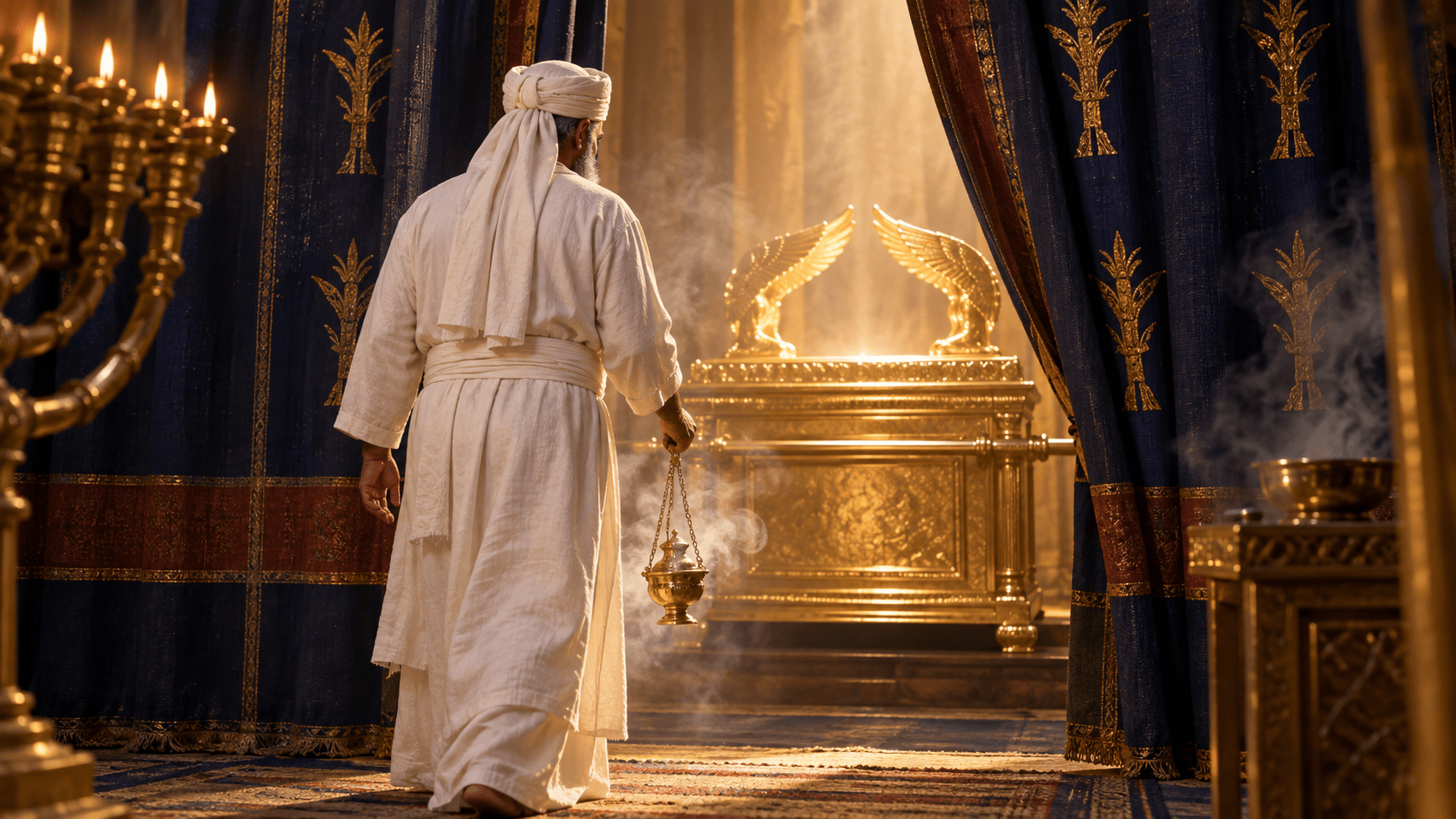
On the Day of Atonement, the high priest entered the Most Holy Place.
Leviticus 16:2
“Speak unto Aaron thy brother, that he come not at all times into the holy place within the vail before the mercy seat…”
This was a unique ministry.
The high priest entered into the presence of Yahuwah.
He entered with blood.
He made atonement.
He cleansed the sanctuary.
Now compare this with Daniel’s vision.
The Judgment Was Set
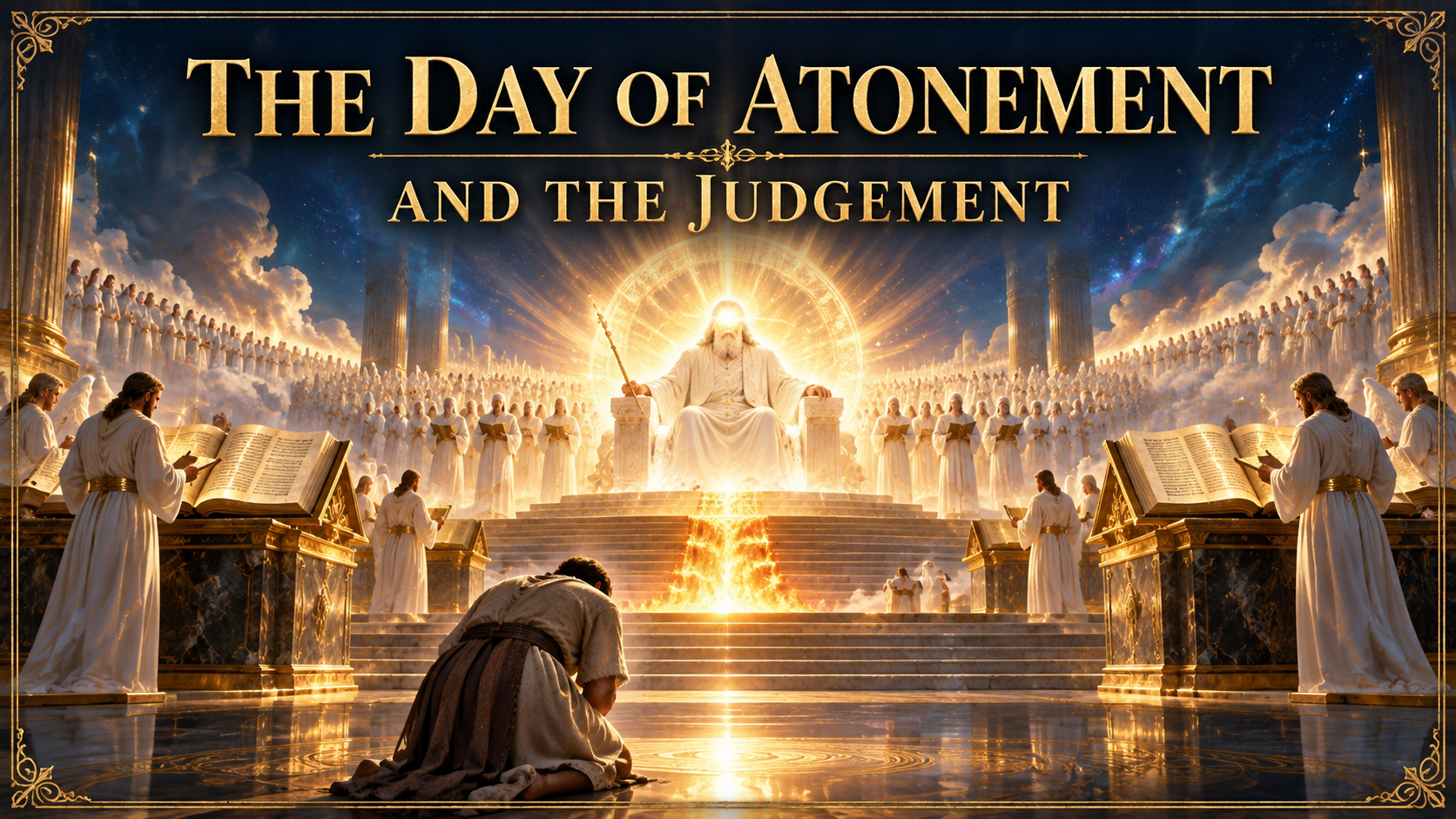
Daniel sees a heavenly scene:
Daniel 7:9
“I beheld till the thrones were cast down, and the Ancient of days did sit, whose garment was white as snow…”
Then:
Daniel 7:10
“A fiery stream issued and came forth from before him: thousand thousands ministered unto him, and ten thousand times ten thousand stood before him: the judgment was set, and the books were opened.”
Notice what Daniel sees:
- the Ancient of Days seated,
- His garment white as snow,
- heavenly beings standing before Him,
- judgment beginning,
- and books being opened.
This is unmistakably a heavenly judgment scene.
Then Daniel sees:
Daniel 7:13
“One like the Son of man came with the clouds of heaven, and came to the Ancient of days…”
The Son of Man comes before the Ancient of Days.
The similarity with the Day of Atonement is significant.
On the Day of Atonement, the high priest entered into the presence of Yahuwah.
In Daniel 7, the Son of Man appears before the Ancient of Days in the context of judgment.
Yahushua Is the True High Priest
The book of Hebrews explains the meaning of the earthly sanctuary.
The earthly priesthood was pointing toward something greater.
Hebrews says:
Hebrews 9:7
“But into the second went the high priest alone once every year, not without blood…”
That refers directly to the annual Day of Atonement ministry.
Then Hebrews turns our attention to Yahushua:
Hebrews 9:11–12
“But Messiah being come an high priest of good things to come… neither by the blood of goats and calves, but by his own blood he entered in once into the holy place…”
The earthly high priest pointed forward to Yahushua.
The earthly sanctuary pointed toward a greater reality.
The blood of animals pointed toward His blood.
The Day of Atonement was teaching something greater than itself.
Judgment Appears in the Same Chapter
Hebrews 9 does not stop with sanctuary imagery.
It continues:
Hebrews 9:27
“And as it is appointed unto men once to die, but after this the judgment…”
Then:
Hebrews 9:28
“So Messiah was once offered to bear the sins of many; and unto them that look for him shall he appear the second time…”
Notice the sequence found within the same chapter:
- sanctuary,
- high priest,
- blood,
- atonement,
- Yahushua,
- judgment,
- and His return.
These ideas belong together.
The Sanctuary Is Cleansed
Leviticus says:
Leviticus 16:16
“And he shall make an atonement for the holy place…”
The sanctuary was cleansed on the Day of Atonement.
Then Daniel records:
Daniel 8:14
“Unto two thousand and three hundred days; then shall the sanctuary be cleansed.”
This language should immediately draw our attention back to Leviticus 16.
Whatever prophetic conclusions are eventually drawn from Daniel 8, Scripture gives us a clear precedent:
the cleansing of the sanctuary is associated with the Day of Atonement.
The Books Are Opened
Daniel tells us:
Daniel 7:10
“The judgment was set, and the books were opened.”
Revelation presents the same picture:
Revelation 20:11–12
“And I saw a great white throne, and him that sat on it…”
Then:
“And I saw the dead, small and great, stand before God; and the books were opened…”
Again we find:
- a throne,
- Yahuwah seated,
- books opened,
- and judgment taking place.
This is not merely symbolic language about vague accountability.
Scripture presents judgment as a real heavenly event.
Judgment Begins With the House of God
The Day of Atonement concerned Yahuwah’s covenant people.
It dealt with Israel, the sanctuary, and those who stood before Yahuwah.
Peter writes:
1 Peter 4:17
“For the time is come that judgment must begin at the house of God…”
This fits the same pattern.
Judgment begins with those who claim to belong to Yahuwah.
That is exactly why the call to afflict the soul is so important.
The Day of Atonement was not primarily a day for looking at everyone else.
It was a day for examining ourselves before Yahuwah.
To Be Found Innocent Before Yahuwah
This brings us to an important question.
What does it mean to be found righteous in the judgment?
It cannot mean that we have never sinned.
Scripture says:
Romans 3:23
“For all have sinned, and come short of the glory of God.”
Our hope is not that we can stand before Yahuwah and claim we have never fallen.
Our hope is Yahushua.
John writes:
1 John 2:1
“My little children, these things write I unto you, that ye sin not. And if any man sin, we have an advocate with the Father, Yahushua Messiah the righteous.”
There are two truths here.
First:
“Sin not.”
Yahuwah calls us away from sin.
But second:
“If any man sin, we have an advocate.”
Our hope is not our own perfection.
Our hope is Messiah.
But those who genuinely belong to Him do not use grace as permission to continue willingly in wickedness.
They repent.
They turn.
They seek righteousness.
They humble themselves.
They bear fruit.
This is the picture we see in Isaiah 58.
True Repentance Produces Fruit
The people in Isaiah 58 were fasting, but Yahuwah rejected their outward observance because their lives contradicted their worship.
That tells us something sobering.
It is possible to perform religious actions while our hearts remain unchanged.
We can:
- fast,
- pray,
- attend assemblies,
- study Scripture,
- speak about Yahuwah,
- and still fail to live according to His character.
That is why Yahuwah said:
“Loose the bands of wickedness.”
“Let the oppressed go free.”
“Deal thy bread to the hungry.”
“Bring the poor… to thy house.”
“Cover the naked.”
These are not ways to purchase salvation.
They are evidence of a transformed heart.
The Day of Atonement and Judgment Follow the Same Pattern
When we place these Scriptures together, the pattern becomes increasingly clear.
| Day of Atonement | Judgment |
|---|---|
| The people afflict their souls | Humanity stands accountable before Yahuwah |
| False outward religion is exposed | The heart is revealed |
| High priest enters before Yahuwah | Son of Man comes before Ancient of Days |
| Sanctuary is cleansed | Judgment deals with the problem of sin |
| Sin is confessed | Records are opened |
| Some are cut off | Separation takes place |
| Righteousness is revealed in the life | Fruit reveals the condition of the heart |
| Sin is removed | Evil is ultimately removed |
The similarities are profound.
The Final Removal of Sin
At the conclusion of the Day of Atonement, Aaron placed the sins of Israel upon the live goat:
Leviticus 16:21
“And Aaron shall lay both his hands upon the head of the live goat, and confess over him all the iniquities of the children of Israel…”
Then:
Leviticus 16:22
“And the goat shall bear upon him all their iniquities unto a land not inhabited…”
Sin was removed from the camp.
This points toward the ultimate purpose of Yahuwah’s plan.
Sin will not continue forever.
Revelation says:
Revelation 21:4
“And God shall wipe away all tears from their eyes; and there shall be no more death…”
The judgment ultimately leads to the complete removal of sin and its consequences.
The Hour of His Judgment Is Come
Revelation declares:
Revelation 14:7
“Fear God, and give glory to him; for the hour of his judgment is come…”
Then, shortly afterward:
Revelation 14:12
“Here is the patience of the saints: here are they that keep the commandments of God, and the faith of Yahushua.”
Notice the balance.
They have:
the faith of Yahushua
and
the commandments of Yahuwah.
Faith and obedience are not enemies.
True faith produces obedience.
The same principle appears in Isaiah 58.
True affliction of the soul produces righteous fruit.

What Should We Be Doing?
If the Day of Atonement teaches us anything, it is that this is not a time for self-righteousness.
It is a time for humility.
It is a time to ask:
Am I holding bitterness toward someone?
Am I oppressing someone?
Am I refusing forgiveness?
Am I ignoring someone in need?
Am I outwardly religious while inwardly unchanged?
Am I living in deliberate sin while claiming to belong to Yahuwah?
Isaiah 58 tells us that Yahuwah is not interested in empty religious performance.
He wants repentance that produces mercy.
He wants humility that produces righteousness.
He wants worship that changes how we treat others.
A Time to Examine Ourselves
Paul writes:
2 Corinthians 13:5
“Examine yourselves, whether ye be in the faith…”
That is exactly the spirit of the Day of Atonement.
Not examining everyone else.
Not proving ourselves superior.
Not boasting in our own righteousness.
But examining ourselves.
Are we walking with Yahuwah?
Are we trusting Yahushua?
Are we turning from sin?
Are we showing mercy?
Are we bearing fruit?
Are we caring for those around us?
Conclusion
The Day of Atonement gives us one of Scripture’s clearest pictures of how Yahuwah deals with sin.
The people humble themselves.
The High Priest enters before Yahuwah.
The sanctuary is cleansed.
Sin is dealt with.
The hearts of the people are revealed.
Those who refuse to humble themselves are cut off.
Sin is ultimately removed.
Isaiah 58 then shows us what Yahuwah actually desires from those who claim to afflict their souls.
Not merely hunger.
Not merely bowed heads.
Not merely religious appearance.
But repentance.
Mercy.
Justice.
Compassion.
Righteousness.
Then Daniel shows us the Ancient of Days seated upon His throne:
“The judgment was set, and the books were opened.”
Hebrews reveals Yahushua as our High Priest.
Matthew reveals the separation of the sheep and the goats.
Revelation reveals the judgment reaching its final conclusion.
The pattern is difficult to miss.
The Day of Atonement points us toward the great work of Yahuwah in dealing with sin once and for all.
And the message for us is deeply personal.
Humble yourself before Yahuwah.
Turn from wickedness.
Show mercy.
Care for those in need.
Walk in righteousness.
Trust in Yahushua your High Priest.
And when the judgment is set and the books are opened, may we be found not trusting in our own righteousness, but covered by the righteousness of Messiah and bearing the fruit of a life genuinely surrendered to Him.
Leave a Reply