

“He appointed the moon for seasons; the sun knoweth its going down.” – Psalm 104:19
Time is not merely a human invention — it is a creation of Yahuwah (God) Himself. From the very beginning, He placed lights in the heavens “for signs, and for seasons, and for days, and years” (Genesis 1:14). These lights — the sun, moon, and stars — were not only to illuminate the sky but to govern time and mark His appointed times (moedim). Yet over centuries, mankind replaced this divine rhythm with artificial systems detached from creation. Today, most people live by a calendar that Yahuwah never ordained, unaware that His original system still governs His sacred times.
This article explores that divine rhythm — the calendar of Scripture — and shows how it structures the month, the Sabbaths, and the appointed times. We will walk through the sacred festivals, understand their timing and purpose, and rediscover the heartbeat of Yahuwah’s plan woven into time itself.
The Flow of the Biblical Month
The biblical calendar is luni-solar — governed by the sun and the moon, with the stars marking the seasons. Unlike the Gregorian calendar, which begins months by decree and continues weeks without interruption, the biblical month begins with the first visible crescent moon in the evening sky (Numbers 10:10; 1 Samuel 20:5).
This appearance marks New Moon Day (Rosh Chodesh) — a day of rejoicing, worship, and offerings (Isaiah 66:23; Ezekiel 46:1–3). It is neither one of the six workdays nor a regular Sabbath but stands apart as the reset point of the monthly cycle. After New Moon Day, the weekly count begins anew, and Sabbaths fall on the 8th, 15th, 22nd, and 29th days of the luni-solar month.
A Month in Yahuwah’s Calendar
- Day 1: New Moon Day – a day of worship and renewal
- Days 2–8: Six workdays, Sabbath on Day 8
- Days 9–15: Six workdays, Sabbath on Day 15
- Days 16–22: Six workdays, Sabbath on Day 22
- Days 23–29: Six workdays, Sabbath on Day 29
Because the lunar cycle averages 29.5 days, months are either 29 or 30 days. If a 30th day occurs, it serves as a transitional day before the next New Moon.
This pattern is seen throughout Scripture. As Isaiah prophesied:
“And it shall come to pass, that from one new moon to another, and from one Sabbath to another, shall all flesh come to worship before Me, saith Yahuwah.” (Isaiah 66:23)
The Universal Jewish Encyclopedia affirms:
“Each lunar month was divided into four parts, corresponding to the four phases of the moon. The first week of each month began with the new moon…” (Vol. 10, p. 482)
Philo, the first-century historian, wrote:
“The sacred festival of the new moon, which the people give notice of with the trumpets…” (Special Laws II, XXX, 159)
New Moon Day – A Day Set Apart
New Moon Day (Rosh Chodesh) is more than a marker — it is part of the worship rhythm itself. Yahuwah commanded Israel to blow the trumpet on the new moon (Psalm 81:3) and to bring offerings (Numbers 28:11–15). It was a day when prophets spoke (1 Samuel 20:5), when the temple gates were opened for worship (Ezekiel 46:1–3), and when the people gathered before Yahuwah.
Arthur Spier notes:
“The beginning of the months were determined by direct observation of the new moon… sanctified and announced by the Sanhedrin.” (The Comprehensive Hebrew Calendar, p. 1)
This system was entirely dependent on observation, not calculation. As Emil Schürer wrote:
“They did not in the time of Jesus Christ possess as yet any fixed calendar, but on the basis of a purely empirical observation… they began a new month with the appearing of the new moon.” (The History of the Jewish People, p. 366)
The Weekly Sabbath – A Sign of Creation
The Sabbath is woven into creation itself:
“And on the seventh day Elohim ended His work… and He rested… and blessed the seventh day, and sanctified it” (Genesis 2:2–3).
But unlike the fixed Saturday of the modern week, the Sabbath in Scripture is tied to the lunar cycle. It always follows six workdays after New Moon Day and recurs on the 8th, 15th, 22nd, and 29th days. The new moon resets the count each month.
The Encyclopaedia Biblica notes:
“It is most significant that in the older parts of the Hebrew scriptures the new moon and the sabbath are almost invariably mentioned together…” (1899, pp. 4178–4179)
This structure explains why Israel’s Sabbaths coincided with major events — the Passover on the 14th, the crossing of the Red Sea on the 21st, and the Feast of Unleavened Bread all aligned naturally with Sabbaths on the 15th and 22nd. The rhythm of Yahuwah’s time governed their journey.
And here lies a crucial truth: the Sabbath cannot fall on a calendar that begins in a different location or by a different standard than the one Yahuwah established. Because the biblical calendar begins with the visible new moon — an event that appears in different locations across the earth — the start of the biblical month and day shifts naturally with the heavens. The Gregorian calendar, by contrast, fixes its days to a man-made International Date Line and starts them at midnight. These two systems do not align. A Sabbath based on a fixed Saturday cycle is therefore disconnected from the rhythm established in Scripture. Yahuwah’s Sabbath flows from His calendar — and His calendar flows from the heavens.
Passover – Deliverance and the Beginning of Redemption
- When: 14th day of the first month (New Moon)
- Scripture: Exodus 12:1–14; Leviticus 23:5
Passover (Pesach) marks the moment Yahuwah delivered Israel from bondage in Egypt. It commemorates the lamb slain and the blood placed on the doorposts, pointing prophetically to Yahshua (Jesus), the Lamb of Elohim who takes away the sin of the world (John 1:29).
“This month shall be unto you the beginning of months: it shall be the first month of the year to you.” (Exodus 12:2)
This command aligns the biblical year with spring in the northern hemisphere, the season of renewal and life — not the middle of winter as with the Gregorian calendar.
Passover is not a Sabbath, but it always precedes one: the 15th day, the first day of Unleavened Bread, is a high Sabbath. Passover is always the sixth day of the week.
The Feast of Unleavened Bread – A Call to Purity
- When: 15th to 21st day of the first month (New Moon)
- Scripture: Leviticus 23:6–8
Immediately after Passover begins the seven-day Feast of Unleavened Bread (Chag HaMatzot), during which leaven is removed from homes and only unleavened bread is eaten. This removal symbolizes cleansing from sin and corruption (1 Corinthians 5:7–8). It symbolises new life and a fresh start with sin being removed.
The first and seventh days of this feast are holy convocations — Sabbaths — and they always start upon the 15th day of the lunar month. Israel’s exodus from Egypt occurred on this very Sabbath (Exodus 12:17; Deuteronomy 16:1).
First Fruits – The Barley Harvest and Yahshua’s Resurrection
- When: “On the morrow after the Sabbath” following Passover
- Scripture: Leviticus 23:9–14
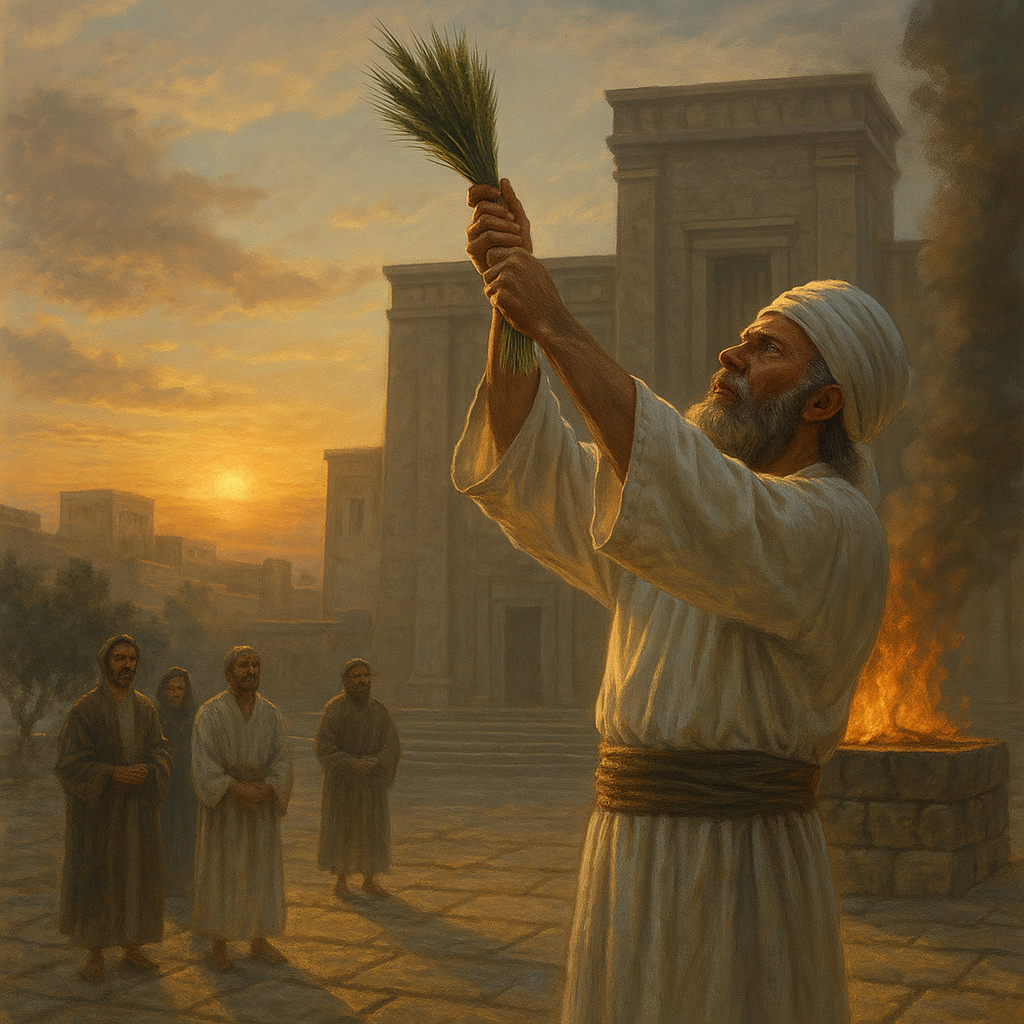
The Feast of First Fruits (Yom HaBikkurim) marked the beginning of the barley harvest, the first harvest of the year. A sheaf of barley was waved before Yahuwah as a sign of gratitude and dedication.
This appointed time prophetically pointed to Yahshua’s resurrection. As Paul wrote,
“But now is Messiah risen from the dead, and become the firstfruits of them that slept.” (1 Corinthians 15:20)
Just as the barley sheaf was lifted up as the first of the harvest, so Yahshua rose as the first of those who will be resurrected. This feast was not fixed to a calendar date but to the Sabbath cycle, showing the deep connection between the lunar calendar and the appointed times.
It was at the Barely harvest that the first resurrection took place of thise who had died before Christ had died and were found to be His.
Matthew 27:52–53 (KJV)
“And the graves were opened; and many bodies of the saints which slept arose,
And came out of the graves after his resurrection, and went into the holy city, and appeared unto many.”
This feasts also points to another similar to it, which we will discuss in detail later.
Pentecost (Shavuot) – The Appointed Time of Harvest
- When: Counted from after the Feast of Unleavened Bread
- Scripture: Leviticus 23:15–22
Pentecost (Shavuot), also called the Feast of Weeks or the Time of Harvest, is unique among the moedim. It is not assigned to a fixed date but is instead counted from the Feast of Unleavened Bread. “And ye shall count unto you from the morrow after the Sabbath… seven Sabbaths shall be complete” (Leviticus 23:15–16). On the fiftieth day, a new offering was presented — two loaves of leavened bread from the wheat harvest.
This appointed time is deeply prophetic. The first harvest — barley — represents Yahshua, the “firstfruits” of resurrection. The second harvest — wheat — points to the greater harvest of souls, those who will be gathered into the Kingdom. As Yahshua said, “The harvest is the end of the world, and the reapers are the angels” (Matthew 13:39).
Historically, this was the time when Torah was given at Sinai and, centuries later, when the Spirit was poured out at Pentecost (Acts 2:1–4). Both events occurred at this appointed time, linking law and Spirit, instruction and empowerment.
Pentecost also points forward to the final harvest at the end of the age, when humanity will be divided as described in Leviticus 16. On the Day of Atonement, two goats were chosen: one was slain as a sin offering, while the other was sent alive into the wilderness, bearing the iniquities of the people. This profound imagery reveals the destiny of all humanity. One group will perish under judgment because of unrepented sin, while another — the 144,000 who “keep the commandments of Elohim and the faith of Yahshua” (Revelation 14:12) — will be preserved and led through the wilderness, just as Israel was preserved in the wilderness after leaving Egypt.
The wilderness here represents divine protection and refinement — a place where Yahuwah shields His people as He purges sin from the earth. Just as the scapegoat carried Israel’s sins away into an uninhabited land (Leviticus 16:21–22), so will sin and rebellion ultimately be removed from Yahuwah’s presence. Pentecost, then, is not only about the giving of Torah or the outpouring of the Spirit — it is a prophetic marker of the great separation to come, when the wheat and the tares are divided, and those who belong to Yahuwah are gathered into His Kingdom.

The Day of Trumpets – The Call to Prepare
- When: 1st day of the seventh month (New moon)
- Scripture: Leviticus 23:23–25
The Day of Trumpets (Yom Teruah) heralds the beginning of the seventh month. It is a day of blowing trumpets, a sacred assembly, and a call to repentance and readiness. Trumpets in Scripture announce royal decrees, summon people to battle, and proclaim the presence of the King.
Prophetically, Yom Teruah points forwards to the return of Yahshua with the time of tribulation. “For the Lord himself shall descend from heaven with a shout, with the voice of the archangel, and with the trump of Elohim” (1 Thessalonians 4:16).
Yet Yom Teruah is more than a single moment — it is the signal of a coming season. It opens the most sacred period of the year: the Ten Days of Awe, leading to the Day of Atonement. It calls Yahuwah’s people to self-examination, repentance, and readiness for what is to come.
The Day of Atonement – A Day of Judgment and Mercy
- When: 10th day of the seventh month (New Moon)
- Scripture: Leviticus 23:26–32
The Day of Atonement (Yom Kippur) is the most solemn day in Yahuwah’s calendar. On this day, Israel afflicted their souls, ceased from all work, and sought cleansing from sin. It was the one day each year the high priest entered the Most Holy Place to make atonement for the people.
Prophetically, Yom Kippur represents the final judgment — the day when sins are blotted out and accounts are settled. It points to Yahshua as both our High Priest and our atoning sacrifice (Hebrews 9:11–12). Through Him, mercy triumphs over judgment.
It is significant that Yom Kippur falls ten days after Trumpets — a reminder that Yahuwah gives time for repentance before judgment. These ten days are a time of reflection and turning back to Him, aligning one’s life with His will before the great and dreadful Day of Yahuwah (Joel 2:31).

The Feast of Booths – Dwelling with Yahuwah
- When: 15th to 21st day of the seventh month
- Scripture: Leviticus 23:33–44
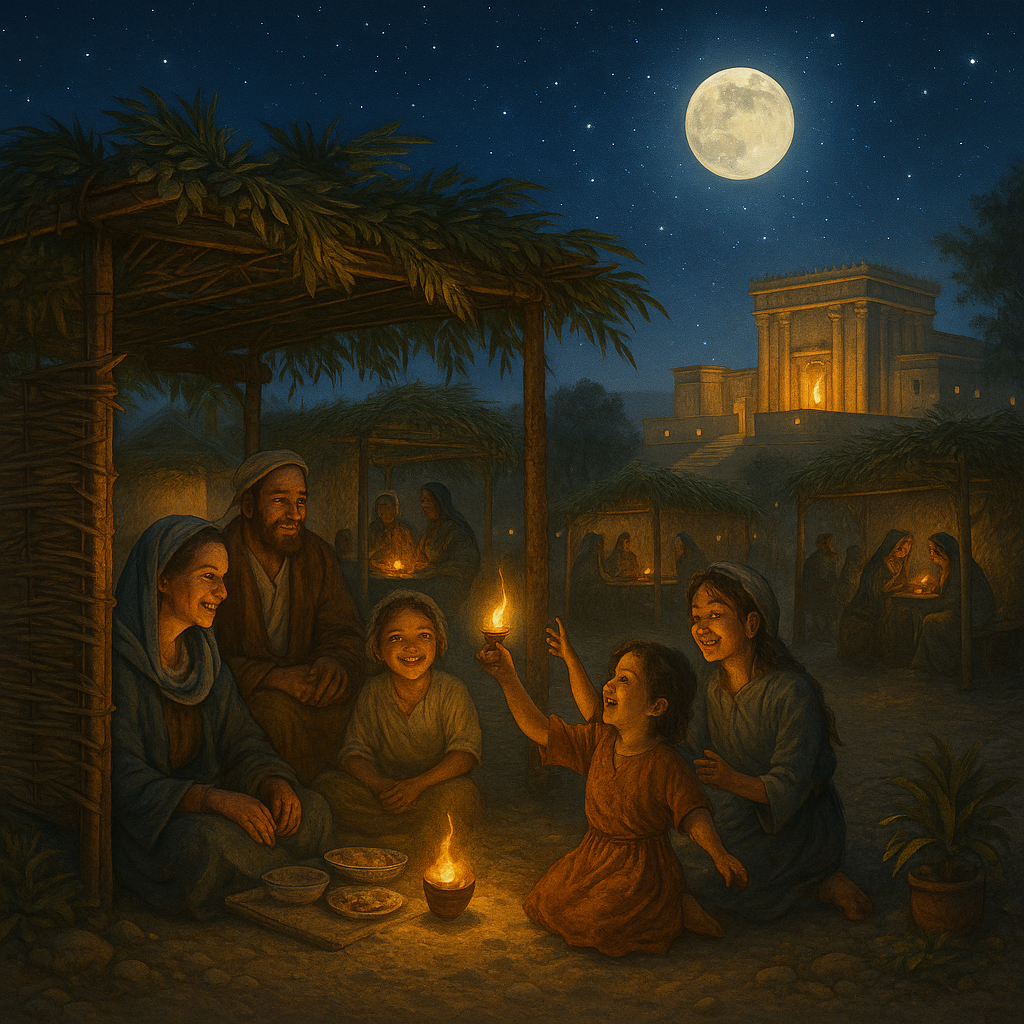
The final festival of the year is the Feast of Booths (Sukkot), a joyful seven-day celebration of Yahuwah’s provision and presence. Israel was commanded to dwell in temporary shelters (sukkot) to remember their journey through the wilderness, when Yahuwah dwelled among them.
Prophetically, Sukkot points forward to the time when Yahuwah will dwell with His people forever:
“Behold, the tabernacle of Elohim is with men, and He will dwell with them…” (Revelation 21:3)
It is also the festival of the final harvest — the ingathering — representing the great multitude “which no man could number” (Revelation 7:9). It is the culmination of Yahuwah’s plan: deliverance (Passover), cleansing (Unleavened Bread), resurrection (First Fruits), empowerment (Pentecost), awakening (Trumpets), judgment and mercy (Atonement), and finally, eternal fellowship (Booths).

Why These Appointed Times Cannot Be Mapped on the Gregorian Calendar
The appointed times (moedim) of Scripture cannot be accurately mapped onto the modern Gregorian calendar because the two systems start from different reference points and follow different rhythms. Trying to match them is like trying to sing the words of your favorite song from the beginning after the music has already started — they simply do not line up.
The biblical calendar is anchored to observable celestial events — the new moon and the turning of the seasons. The Gregorian calendar, by contrast, is based on man-made conventions: midnight as the day’s start, the International Date Line to divide time zones, and solar-only months that are completely detached from lunar cycles.
Because the new moon does not appear in the same place in the sky each month, the beginning of biblical months and days shifts across the earth. A single biblical day can overlap two different Gregorian dates, and a biblical month may begin on a different Gregorian day with each cycle. As a result, Sabbaths and moedim do not fall consistently on Gregorian dates — they follow the movement of the heavens, not human decree.
How the Sabbath Became Disconnected from Its Original Calendar
Even Jewish sources acknowledge that the calendar — and with it, the Sabbath — changed over time.
- Mishnah Rosh Hashanah 1:1–2 shows that sacred time originally depended on eyewitness sightings of the new moon.
- Talmud Sanhedrin 13b records a major transition: “In earlier times, they would sanctify the month by sighting; but now we calculate.”
- Maimonides (Kiddush HaChodesh 5:2) explains that from the time of Ezra until the 4th century CE, months were set by observation. However, under Hillel II, a fixed, calculated calendar was introduced “for all generations” due to persecution and the scattering of the Jewish people.
This transition — from observational lunar reckoning to calculated fixed cycles — marks the point when the Sabbath became detached from its original calendar context.
The Roman Influence and the Continuous Week
The Roman planetary week — a continuous seven-day cycle named after celestial deities — did not become widespread until the first centuries CE. Under Roman influence, both Judaism and Christianity eventually adopted this continuous weekly cycle:
- The Jewish Sabbath was fixed to dies Saturni (“Saturn’s day”), now known as Saturday.
- Early Christians, distinguishing themselves from Judaism, began worshiping on dies Solis (“the day of the sun”), or Sunday.
Once this shift occurred, biblical appointed times were no longer tied to the new moon. They were forced into the structure of a solar calendar and a continuous weekly cycle — systems that were completely foreign to the timekeeping described in the Torah.
Scholarly Acknowledgement of the Shift
Modern Jewish scholarship also recognizes this historical change:
- Sacha Stern, in Calendar and Community (Oxford, 2001), notes: “Only in the 4th century did a calculated calendar replace the observational system, and with it came a dissociation of the weekly cycle from lunar phases.”
- The Encyclopaedia Judaica (“Calendar”) states: “The continuous week, independent of the lunar month, was adopted under Roman influence.”
These statements confirm that the ancient Sabbath and moedim cannot be directly overlaid onto the Gregorian calendar because they were originally based on a lunar rhythm that reset with each new month, not on a continuous solar cycle.
The Result: A Different Sabbath Rhythm
This is why a Sabbath defined by a continuous Saturday cycle cannot be the same Sabbath described in Scripture. Its rhythm is now disconnected from the new moon — the foundational marker of Yahuwah’s calendar. As the Encyclopaedia Biblica observes:
“The intimate connection between the week and the month was soon dissolved… so that the new moon no longer coincided with the first day of the week.” (1899, p. 5290)
Final Thought
The biblical appointed times were designed to follow heavenly signs, not human schedules. The modern Gregorian system — built on man-made conventions and a solar-only structure — simply cannot reproduce the original timing of Yahuwah’s moedim. Only a calendar anchored to the new moon and the observable heavens can align with the sacred rhythm established in Scripture.
Conclusion: Rediscovering Yahuwah’s Time
The way humanity measures time today is a triumph of organisation — a global system that keeps businesses, governments, and nations in sync. Yet for all its utility, it is not the calendar of Scripture. It is a system built by men, fixed to political lines, and detached from the sun, moon, and stars Yahuwah placed in the heavens.
The biblical calendar is different. It calls us to lift our eyes to the heavens, to watch for the setting of the sun and the first sliver of the new moon. It ties us into the rhythm of creation and aligns us with Yahuwah’s appointed times. These moedim are not mere memorials; they are prophetic markers — rehearsals of redemption and signs of the Messiah’s return.
Scripture warns, “All the world wondered after the beast” (Revelation 13:3), and Daniel foresaw a power that would “think to change times and laws” (Daniel 7:25). This has happened — the very fabric of time has been altered. Yet Revelation also speaks of a faithful remnant: “Here is the patience of the saints: here are they that keep the commandments of Elohim, and the faith of Yahshua” (Revelation 14:12). These are the 144,000 who walk according to Yahuwah’s time, not man’s.
As Isaiah foretold, in the new creation “from one new moon to another, and from one Sabbath to another, all flesh shall come to worship before Me” (Isaiah 66:23). Yahuwah’s calendar has never changed. It remains written in the heavens, calling His people back to His appointed times and preparing them for the return of Yahshua.
Scriptural references
🌙 New Moon and Beginning of Months
- Genesis 1:14 – “Let there be lights in the firmament… for signs and seasons, days and years.”
- Numbers 10:10 – Trumpets blown at new moons and appointed feasts.
- 1 Samuel 20:5, 18 – New moon observed and celebrated.
- Psalm 81:3 – “Blow the trumpet at the new moon…”
- Isaiah 66:23 – “From one new moon to another… all flesh shall come to worship.”
📅 Structure of the Month & Sabbath Pattern
- Ezekiel 46:1 – Gate shut on six working days, open on Sabbath and new moon.
- Leviticus 23:3 – Six work days, seventh day is a Sabbath.
- Exodus 20:8–11 – Sabbath commandment tied to creation.
- Genesis 2:2–3 – Yahuwah rests on the seventh day.
🐑 Passover & Unleavened Bread
- Leviticus 23:4–8 – Dates and commands for Passover and Unleavened Bread.
- Exodus 12:1–14 – Passover instituted.
- 1 Corinthians 5:7–8 – Messiah as Passover lamb.
🌾 First Fruits
- Leviticus 23:9–14 – Offering of firstfruits after Sabbath.
- 1 Corinthians 15:20 – Messiah, the firstfruits of the resurrection.
🔥 Pentecost / Feast of Weeks
- Leviticus 23:15–22 – Count 50 days to Shavuot.
- Acts 2:1–4 – Spirit poured out at Pentecost.
- Matthew 13:39 – “The harvest is the end of the world…”
📯 Feast of Trumpets
- Leviticus 23:23–25 – Day of trumpet blasts.
- 1 Thessalonians 4:16 – “The trumpet of God” at Messiah’s return.
- Revelation 11:15 – The seventh trumpet and the Kingdom proclaimed.
🩸 Day of Atonement
- Leviticus 16 (entire chapter) – The two goats, atonement, and cleansing.
- Leviticus 23:26–32 – Command for the Day of Atonement.
- Hebrews 9:7–12 – Messiah entering the Most Holy Place once for all.
- Revelation 14:12 – The faithful who keep commandments.
🌿 Feast of Booths / Tabernacles
- Leviticus 23:33–43 – Instructions for Sukkot.
- Zechariah 14:16–19 – Nations coming to Jerusalem to keep the feast.
- John 7:2, 37–39 – Yahshua teaching at the Feast of Booths.
⚖️ Final Judgment and Prophetic Fulfillment
- Revelation 20:11–12 – The Great White Throne judgment.
- Daniel 7:9–10 – “The court was seated, and the books were opened.”
- Matthew 25:31–34 – Separation of the sheep and goats.
- Revelation 14:12 – Saints keep the commandments of God and faith of Yahshua.
Historical & Scholarly References
- Universal Jewish Encyclopedia, Vol. 5, “Holidays,” p. 410
- Universal Jewish Encyclopedia, Vol. 2, “Calendar,” p. 631
- Universal Jewish Encyclopedia, Vol. 10, “Week,” p. 482
- Encyclopaedia Biblica (1899), pp. 4178–4179, 5290
- Philo of Alexandria, Special Laws II, 141; Book 26, XXX, 159
- Arthur Spier, The Comprehensive Hebrew Calendar, p. 1
- George Foot Moore, Judaism, Vol. 2, p. 22
- Emil Schürer, The History of the Jewish People in the Age of Jesus Christ, p. 366
 The Calendar of Scripture
STOP! Insulting YAHUAH be using Satans replacement name Yahuwah!Kind Regards Kev
LikeLike
Shalom Kev,
I appreciate your passion, but I want to gently remind everyone here that this space is for respectful discussion and learning, not for personal attacks or accusations.
It’s important to understand that none of the English letters we use today existed in the original Hebrew. They are simply symbols used to represent sounds. What matters is the sound being conveyed, not the specific modern letter we use to write it.
The sacred Name appears in Scripture as יהוה, and whether someone writes it as “Yahuah” or “Yahuwah” is a matter of transliteration — an attempt to represent those ancient sounds using modern letters. Differences like “W” or “V” are linguistic tools, not acts of disrespect.
If you wish to continue this discussion, please do so with kindness and humility, focused on learning together rather than condemning others. Any further hostile comments will be removed to preserve a respectful environment for all.
Shalom,
Robert Richmond
LikeLike
You are mistaken. The original world was destroyed at the time of the flood, see Gen. 6:13 so the calendar of the beginning requires some adjusting ever since that time. What’s more until the flood there was NO moon cycle, every night the moon ruled, there was a full moon, (not just some nights according to Genesis 1:16). Since the flood the moon cycle tells us how much Yahweh changed the seasons by the 28 days of the cycle. The 29th day accounts for the double day written about in Joshua and the 1/4 day accounts for the sun backing up from set, back to high noon for king Hezekiah. There is no calendar in use today that reflects the truth, such as the day before was the Sabbath of Genesis, it also is the Passover, this is as clear as it can be in Scripture, but like you wrote, I too was raised believing the Pope’s calendar, then some 70 years ago I began to believe the Luner calendar, finally some 25 years ago after I retired and began to spend more time studying The Word the calendar of Genesis opened up in full view, which cleared up so much concerning the timing of the feast, putting to rest discrepancies concerning seasonal information in the instructions and lunar calendar days and times. Now I know that anyone can know the day of creation, of the Passover and Israel left Egypt, the day they entered The Promised Land, the day of the Birth of Yahshua, the death and resurrection.
LikeLike
Hi Donald,
I found this message you sent in the Spam.
I appreciate the time and thought you’ve put into your perspective, but I must respectfully disagree with several key points in what you’ve shared.
First, Genesis 1:14–16 does not state or imply that the moon was always full before the flood. It tells us that the greater light and the lesser light were created to govern the day and the night and to serve as signs, seasons, days, and years. That includes the entire lunar cycle — from first light to fullness to darkness. There is no passage in Scripture that says the lunar cycle began only after the flood or that the moon once remained full continuously.
Second, while the flood was indeed a pivotal event, it did not “reset” Yahweh’s timekeeping system. Genesis 8:22 affirms this plainly: “While the earth remains, seedtime and harvest, cold and heat, summer and winter, day and night shall not cease.” The flood changed the face of the earth but did not alter the celestial order that governs days, months, and seasons. The sun, moon, and stars continued their ordained roles exactly as they were established “from the beginning.”
Importantly, Scripture itself testifies to the pattern of light and darkness throughout the lunar cycle. Across four out of five key events — new moon day, the first, second, and third Sabbaths — light is present, while darkness is associated with the fourth Sabbath. Even more striking, the second Sabbath shows the greatest light, far exceeding any other day in the cycle. This is not coincidence: the waxing and waning of the moon — from first light, to full, to no light — is mirrored in the very structure of the Word. Yahweh’s calendar is written not only in the heavens but also in Scripture itself.
Lastly, while human calendars such as the Gregorian system are indeed imperfect, the Word never reveals a “Genesis calendar” that operates apart from the sun, moon, and stars. From the beginning, time was to be reckoned by observable signs — the new moon marking the months (1 Samuel 20:5, Psalm 81:3) and the sun governing days and years (Genesis 1:14). Those signs have remained constant since creation.
I share this with respect and sincerity: we must be cautious not to build doctrines on assumptions Scripture never states. The lights in the heavens remain the timepieces Yahweh appointed — and their patterns are faithfully echoed in His Word from beginning to end.
Kind regards,
Robert-Aaron
LikeLike