
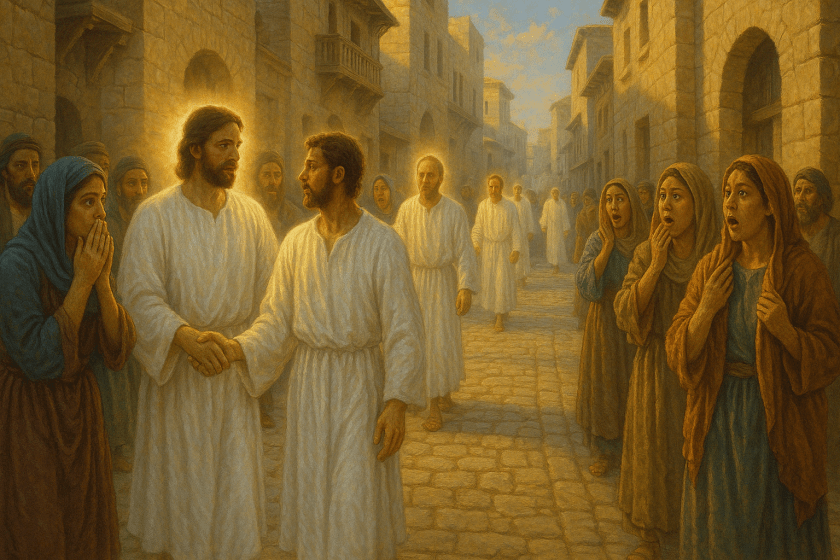
Today, according to the Scriptural calendar, marks a significant biblical day—the Day of First Fruits. Scripturally, this day falls on the 16th day of the month, precisely the first day of the week after the Sabbath following Passover. Remarkably, it is also the day Yahushua rose from the dead, becoming the “first fruits” of resurrection.
Biblical Significance of First Fruits
In Deuteronomy 26:1-4, 9-10, Yahuwah commands His people to offer the first fruits of their harvest:
“And it shall be, when you come into the land which Yahuwah your Elohim is giving you as an inheritance, and you possess it and dwell in it, that you shall take some of the first of all the produce of the ground, which you shall bring from your land that Yahuwah your Elohim is giving you, and put it in a basket and go to the place where Yahuwah your Elohim chooses to make His name abide.” (Deut. 26:1-2)
The historical record of this event is given in Joshua 5:10-12:
“Now the children of Israel camped in Gilgal, and kept the Passover on the fourteenth day of the month at twilight on the plains of Jericho. And they ate of the produce of the land on the day after the Passover (15th—a Sabbath), unleavened bread and parched grain, on the very same day. Then the manna ceased on the day after they had eaten the produce of the land (16th); and the children of Israel no longer had manna, but they ate the fruit of the land of Canaan that year.”
Yahushua and the Day of First Fruits
This historical and spiritual context is critical to understanding Yahushua’s resurrection. As Paul explains in 1 Corinthians 15:20-23:
“But now is Yahushua risen from the dead, and become the first fruits of them that slept. For since by man came death, by man came also the resurrection of the dead.”
This aligns perfectly with Leviticus 23:9-12, which commands the wave sheaf offering (first fruits) to be presented the day after the Sabbath following Passover, clearly identifying the day as the 16th:
“He shall wave the sheaf before Yahuwah so that you may be accepted; the priest shall wave it on the day after the Sabbath.”
Timeline of Yahushua’s Crucifixion and Resurrection
Understanding the timeline:
- 10th day: Yahushua enters Jerusalem (lamb selection, beginning of inspection).
- 11th-13th days: Yahushua is inspected and persecuted—three days and three nights.
- 14th day: Passover – Yahushua was crucified.
- 15th day: Sabbath – Yahushua rested in the tomb.
- 16th day: First Fruits – Yahushua rose from the dead.
The scriptures confirm this repeatedly. Luke 23:56 explicitly states that after preparing spices, the followers rested on the Sabbath, clearly marking the 15th as a day of rest.
Resolving the “Three Days and Three Nights” Misunderstanding
Confusion arises from Matthew 12:40:
“For as Jonas was three days and three nights in the whale’s belly; so shall the Son of man be three days and three nights in the heart of the earth.”
The term “heart of the earth” is not about being buried underground. In Hebraic idiom, it can mean being handed over to the authority of man, the dominion of sin, or the realm of darkness. From the moment Yahushua is betrayed by Judas, bound, and handed over, He is placed under the dominion of earthly rulers—those representing darkness. This fits exactly with His statement in Luke 22:53:
“But this is your hour, and the power of darkness.”
To correctly interpret this, we must understand the Jewish idiom “heart of the earth,” referring specifically to Jerusalem—the center of persecution and trial. The lamb selected on the 10th day was inspected for three days and nights to ensure it had no blemish (Exodus 12:3-6). Similarly, Yahushua was inspected, interrogated, and persecuted by the religious authorities from the 11th to the 13th day, fulfilling this prophecy precisely.
Multiple scriptures (Matthew 16:21, Mark 9:31, Luke 24:7, etc.) consistently state Yahushua would rise on the third day—not after the third day. The “three days and nights” prophecy was given specifically to the wicked who persecuted Him, marking the period of His persecution in Jerusalem, the “heart of the earth.” Be wary of those who tell you it represents His death and resurrection as it is not from Him.
Significance for Today
Today is a day to celebrate Yahushua, our risen Savior, who became the first fruits of resurrection, promising eternal life to all who follow Him. It’s a day Yahuwah ordained from ancient times to foreshadow the ultimate redemption and restoration available through Yahushua.
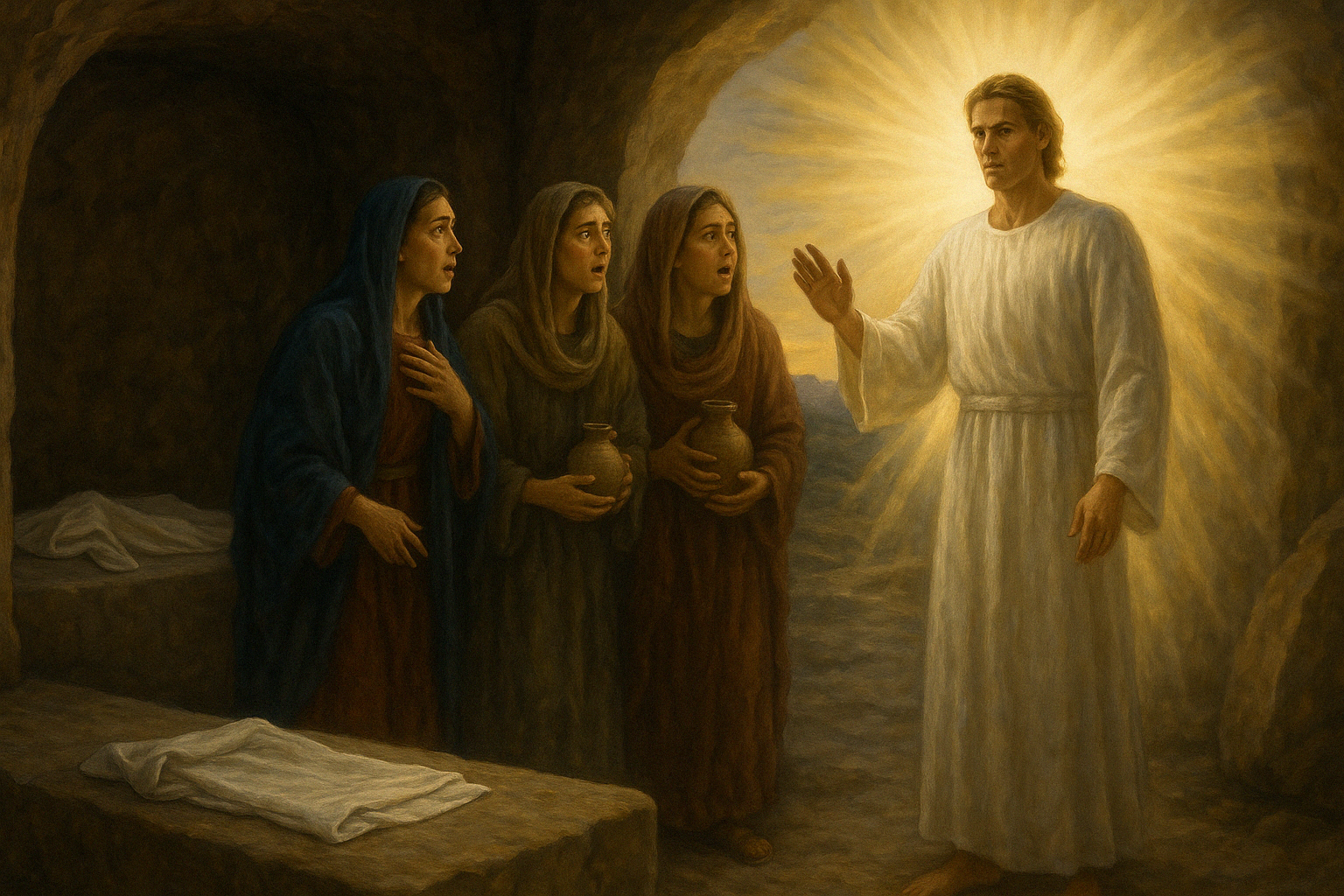
1 Now when the Sabbath was past, Mary Magdalene, Mary the mother of James, and Salome bought spices, that they might come and anoint Him. 2 Very early in the morning, on the first day of the week, they came to the tomb when the sun had risen. 3 And they said among themselves, “Who will roll away the stone from the door of the tomb for us?” 4 But when they looked up, they saw that the stone had been rolled away—for it was very large. 5 And entering the tomb, they saw a young man clothed in a long white robe sitting on the right side; and they were alarmed.
6 But he said to them, “Do not be alarmed. You seek Yashua of Nazareth, who was crucified. He is risen! He is not here. See the place where they laid Him. 7 But go, tell His disciples—and Peter—that He is going before you into Galilee; there you will see Him, as He said to you.”
May we discard traditions of men, such as Easter, and return to observing the days Yahuwah Himself set apart—Passover, Unleavened Bread, and First Fruits. As Exodus 12:14 says:
“This day shall be to you a remembrance; and you shall keep it as an appointed time to Yahuwah throughout your generations.”
Let us honour Yahuwah’s appointments, remembering the profound significance embedded in His calendar and the Messiah’s fulfillment of prophecy.

 The Calendar of Scripture
According to The Scripture’s the yearly calendar begins three days before the fall equinox, thus the resurrection day was October 4th on the Roman calendar, you know shortly after the fig tree that was in leaf and should have been with fruit was not.
There a number of passages that spell out this fact, care to read them?
Donald Vander Jagt
LikeLike
The scriptural calendar and the gregorian calendar do not align, so using gregorian dates makes no sense really.
LikeLike
True none of this world’s calendars align with the Scripture, however the events of Scripture took place on days certain, and the incorrect dates of this world’s calendars can be pointed out, since the calendars do all account for a year’s worth of time. Right?
LikeLike
Shalom🙏The scriptures are very clear th
LikeLike
Your text keeps being cut off?
LikeLike
Yes, the Scriptures clearly gives the reader the calendar. Three days after creation all vegetation was made in its harvest mode, (ready to feed animals and Adam the same week) the next day, the fourth day the first season began, and of course that had to be the harvest season, therefore it had to be the fall equinox. Mandating that the calendar year begins three days before the fall equinox. And if a reader pays attention to the written word, studing The Word the reader will notice that seasonal and historical information will indicate that the events we read about, such as the flood, the Passover, the entrance into Canaan, The Birth, the Death and the Resurrction all took place within two weeks of fall equinox in the year of each event.
LikeLike
You’ve laid out a fascinating solar‐seasonal reading of Genesis 1—connecting Day 3’s fruiting vegetation (Gen 1:11–13) with Day 4’s institution of “lights…for signs and for seasons” (Gen 1:14–19)—and from that you infer the solar year must begin at the fall equinox. A few thoughts and questions that might help sharpen and test this framework:
1. Where does “harvest season” first appear?
On Day 3 the earth brings forth vegetation, “seed-bearing… and trees bearing fruit” (Gen 1:11). On Day 4 the sun and moon are set “for signs and for seasons” (Hebrew moʿedîm, often translated “appointed times” or “festivals”). It’s an elegant move to see Day 4 as inaugurating harvest—but the text itself doesn’t say “harvest” there. Do you see any later biblical passage that explicitly ties Gen 1:14’s moʿedîm to the autumn harvest?
2. Fall equinox versus spring feasts.
Traditionally, the Hebrew calendar marks its first month (Abib/Nisan) in spring (Ex 12:2), because the Exodus-Passover cycle is a spring festival. You’re suggesting instead that the year’s start is three days before the fall equinox, so that key events (the Flood, Passover, entrance into Canaan, Christ’s birth, death, and resurrection) all fall within two weeks of that equinox. How do you reconcile Exodus 12’s “This month shall be for you the beginning of months” (which in historic practice aligns with spring barley harvest) with a fall‐based year?
3. Dating the Flood and Patriarchal events.
You mention that the Flood, the crossing of the Red Sea/Passover, Israel’s entry into Canaan, and New Testament events all cluster around the fall equinox. Have you mapped those to specific Hebrew calendar dates or lunar phases in biblical chronology? For example, Genesis 7:11 dates the Flood’s start at “the seventeenth day of the second month”—what would that translate to in your fall‐based solar year?
4. The unchanging work of Days 1–3.
I agree: the sequence of creation (“light…expanse…land…vegetation”) is fixed regardless of when the year reckons from. But once you shift the “new year” to just before Day 4’s equinox, you effectively reset the numbering of all subsequent festivals and seasons. How do the later Mosaic festivals (which are described as spring feasts and fall feasts) fall out under your reckoning? Would Passover still land “within two weeks of fall equinox,” or would it end up in what we now call spring?
Are you aware that on one side of the earth it is summer and the other winter and that these seasons are flipped around each half a year?
LikeLike