

I. The Two Harvests in Scripture – Yahuwah’s Pattern of Redemption
From the very beginning, Yahuwah revealed His plan of redemption through the cycles of His creation. The heavens were appointed to mark His times (Genesis 1:14), and the earth itself bears witness through its harvests. Each season of reaping — the Barley and the Wheat — mirrors a stage of His redemptive work.
These are not merely agricultural seasons; they are prophetic appointments that reveal how Yahuwah gathers His people. Just as the land yields fruit in its due season, so too will His covenant people yield a spiritual harvest — first the firstfruits, then the full ingathering.
“The feast of harvest, the firstfruits of your labours which you have sown in the field; and the feast of ingathering, which is in the end of the year.”
— Exodus 23:16
In these two harvests — Barley and Wheat — lies the entire story of salvation:
- The Barley Harvest comes first — tender, early, and gathered gently by hand. It represents the firstfruits, those who rise early, refined through obedience, and presented before Yahuwah as holy.
- The Wheat Harvest follows later — harder grain that requires threshing and winnowing. It represents the greater ingathering — the multitude purified by fire and Spirit, ready for the final harvest at the end of the age.
James wrote of this mystery when he said:
“Be patient therefore, brethren, unto the coming of the Master. Behold, the husbandman waits for the precious fruit of the earth, and has long patience for it, until he receive the early and latter rain.”
— James 5:7
The early rain prepares the barley — the first to ripen. The latter rain ripens the wheat — the full body of believers. Together, these two harvests tell one continuous story — a divine pattern of sowing, reaping, and redemption that begins in Yahushua and ends in the restoration of all things.
Every moed, every appointed time, fits within this agricultural prophecy.
The Feast of First Fruits (Yom HaBikkurim) celebrates the Barley Harvest — the resurrection of Yahushua first, and then those who were His.
The Feast of Weeks (Shavuot) celebrates the Wheat Harvest — the outpouring of His Spirit and the future ingathering of His people.
Thus the pattern stands unbroken: First Fruits — then Harvest.
The first resurrection — then the gathering at the end of the age.
II. The Barley Harvest – Yom HaBikkurim (First Fruits)
The Barley Harvest begins during the Feast of Unleavened Bread. On the day after the Sabbath following Passover, Israel was commanded to bring the very first sheaf — the omer — of barley before Yahuwah. This moed is called Yom HaBikkurim, the Day of First Fruits.
“When you come into the land which I give to you, and reap its harvest, then you shall bring a sheaf of the firstfruits of your harvest to the priest.
And he shall wave the sheaf before Yahuwah, to be accepted for you; on the morrow after the Sabbath the priest shall wave it.”
— Leviticus 23:10–11
This offering was not random; it was prophetic. The waving of the first sheaf symbolized resurrection — life lifted up before the Father as a pledge that the rest of the harvest would follow. The timing is exact: it occurred on the third day from Passover, the 16th day of the first new moon — the very day Yahushua rose from the grave.
“But now Messiah is risen from the dead, and has become the firstfruits of those who have fallen asleep.”
— 1 Corinthians 15:20
His resurrection on Yom HaBikkurim fulfilled the shadow perfectly. He was the first sheaf lifted before Heaven — the guarantee that all who belong to Him will also rise in their time. The earth itself bore witness:
“And the graves were opened; and many bodies of the saints who had fallen asleep were raised,
and coming out of the graves after His resurrection, they went into the holy city and appeared to many.”
— Matthew 27:52–53
That day marked the beginning of the harvest of souls — the first resurrection of the righteous. As the priest waved the barley sheaf before Yahuwah, Heaven received the true Firstfruits — Yahushua Himself, and those raised with Him.
Deuteronomy adds a powerful connection:
“And now, behold, I have brought the firstfruits of the land which You, O Yahuwah, have given me.”
— Deuteronomy 26:10
Just as Israel offered the first of their harvest in thanksgiving, so Yahushua offered Himself — the first of humanity’s redeemed — before the Father. This is why Paul could declare, “Each in his own order: Messiah the firstfruits; afterward those who are Messiah’s at His coming” (1 Corinthians 15:23).
The Barley Harvest thus symbolizes:
- Resurrection and victory over death — the first of the redeemed presented to Yahuwah.
- Purity and obedience — the firstfruits wave offering must be without leaven, representing sin removed.
- Promise of a greater harvest — the guarantee that what began in Yahushua will culminate in the final gathering.
The Feast of First Fruits is therefore not only a celebration of resurrection past but a prophetic assurance of resurrection yet to come. It anchors the entire sequence of Yahuwah’s appointed times — for without the Barley Harvest, there can be no Wheat Harvest, and without the First Fruits, there can be no final ingathering.

III. The Wheat Harvest – Shavuot (Pentecost): The Appointed Time of Ingathering
If the Barley Harvest marked the beginning of redemption, the Wheat Harvest reveals its fullness. This is the moed of Shavuot, also called the Feast of Weeks, known in Greek as Pentecost — meaning “fiftieth”. It is Yahuwah’s Appointed Time of Harvest, the second great reaping that completes the agricultural and prophetic cycle.
“15 Count, so it happens, from the day after the Sabbaths of the wave sheath (unleavened bread), seven Sabbaths complete. 16 Count to the fiftieth day, to the day after the seventh Sabbath; then you shall offer a new grain offering to Yahuwah..”
— Leviticus 23:15–16
Deuteronomy confirms it:
“You shall count seven weeks from the time you begin to put the sickle to the standing grain.
Then you shall keep the Feast of Weeks to Yahuwah your Elohim with a tribute of a freewill offering of your hand.”
— Deuteronomy 16:9–10
The Wheat Harvest fell near the close of the third month — the time when the fields of Israel stood golden and ready for reaping. Yet this was more than an agricultural event — it was a spiritual mystery written into the land itself.
Some may read Leviticus 23:15-16 differently, but I would encourage you to realise that this is a translation from the original scripture, and further that scripture must agree with itself. There are a list of 8 seperate witnesses of this day found in the scriptures. They are also listed blow in the section “Three Witnesses – Daniel, Leviticus, and Jubilees“.
If the Barley Harvest was about removing sin through the resurrection, the Wheat Harvest is about indwelling with the Father.
If First Fruits was about life restored, Shavuot is about life empowered.
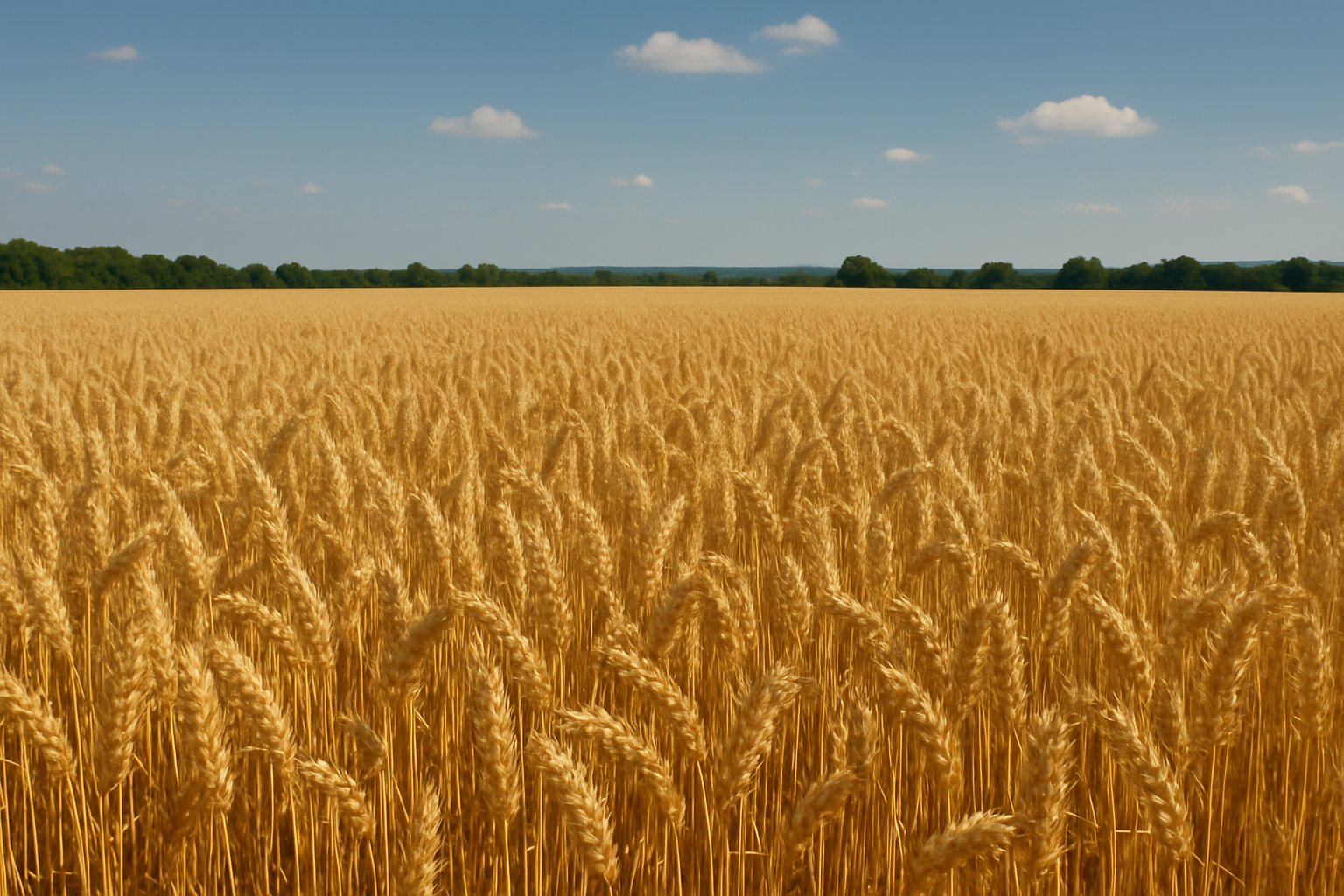
The Fire and Wind of the Wheat Harvest
At Mount Sinai, when the people had come out of Egypt, they arrived at the very time of the Wheat Harvest. There, Yahuwah descended in fire and sound to make covenant with His people.
“And it came to pass on the third day in the morning, that there were thunders and lightnings, and a thick cloud upon the mount,
and the voice of the trumpet exceeding loud; so that all the people that was in the camp trembled.”
— Exodus 19:16
That first Shavuot marked the giving of the Torah — the marriage covenant between Yahuwah and Israel.
Fifteen centuries later, on the same moed, the Spirit descended again — not on stone, but on hearts of flesh.
“When the day of Pentecost had fully come, they were all with one accord in one place.
And suddenly there came a sound from heaven, as of a rushing mighty wind, and it filled all the house where they were sitting.
Then there appeared to them divided tongues, as of fire, and one sat upon each of them.”
— Acts 2:1–3
The same fire, the same sound, the same trumpet call — but a new covenant.
The law given at Sinai was now written within the heart (Jeremiah 31:33). The same Elohim who descended in flame upon a mountain now descended within His people.
Thus, the Wheat Harvest became the feast of empowerment — the moment the field began to yield the full harvest of souls. It was the moment Yahuwah’s Spirit entered His people to enable obedience, endurance, and witness to the nations.
The Prophetic Meaning of the Wheat
Throughout Scripture, wheat represents the righteous — those who will be gathered into Yahuwah’s barn at the end of the age.
“His winnowing fan is in His hand, and He will thoroughly purge His threshing floor, and gather His wheat into the barn;
but He will burn up the chaff with unquenchable fire.”
— Matthew 3:12
The harvest process itself is prophetic.
Barley is soft — it is separated easily by the wind.
Wheat is harder — it must be threshed before the chaff is removed.
So too, the firstfruits were raised through gentle obedience, but the greater harvest — the wheat — will be refined through testing and trial.
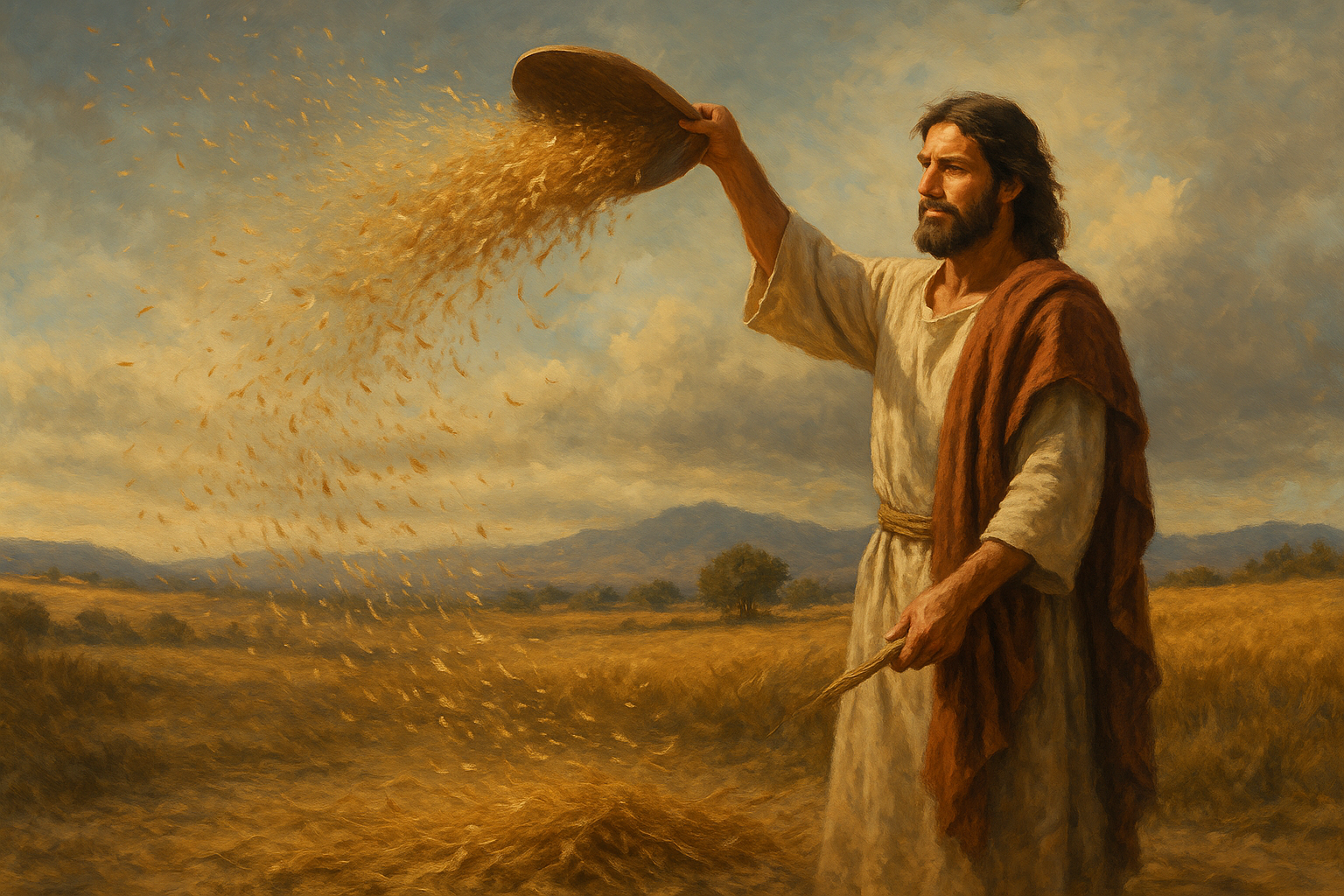
But why is the second harvest more difficult than the first? In the first people were either found following His commandments or not. In the second there is a great multitude who believe they are following them, but cannot see their error. Thus they must go through the fire to be purified as fine Gold.
Shavuot therefore foreshadows the final harvest at the end of the age — the gathering of the redeemed who endure through purification and tribulation. It is the time when the Kingdom will be fully revealed, and Yahushua will reap what He sowed.
“The harvest is the end of the world, and the reapers are the angels.”
— Matthew 13:39

The New Grain Offering – Two Loaves Baked with Leaven
Yahuwah commanded that on Shavuot, two loaves of fine flour be presented — baked with leaven — as a wave offering before Him.
You shall bring from your dwellings two wave loaves of two-tenths of an ephah. They shall be of fine flour; they shall be baked with leaven. They are the firstfruits to the Lord.
– Leviticus 23:17
This is the only feast where leaven — normally a symbol of sin — was allowed. Why?
Because the two loaves represent the two houses — Israel and the nations — both will be redeemed, but at this time they are still imperfect, still in need of refinement. Both will be lifted before Yahuwah, accepted because of the First Fruits already offered — Messiah Himself.
These two loaves also mirror the two harvests — the early and the latter, joined together in one purpose. At the end of days, they will be united into one body — one Bride — purified, empowered, and ready for the final harvest.
Who is Israel today then?
But it is not that the word of Yah has taken no effect. For they are not all Israel who are of Israel, 7 nor are they all children because they are the seed of Abraham; but, “In Isaac your seed shall be called.” 8 That is, those who are the children of the flesh, these are not the children of Yah; but the children of the promise are counted as the seed.
– Romans 9-6-8
And again, they are the children of the promise:
26 For you are all children of Elohim through faith in Yahushua the Messiah.
27 For all of you who were baptised into the Messiah have clothed yourselves with the Messiah.
28 There is [now no distinction in regard to salvation] neither Jew nor Greek, there is neither slave nor free, there is neither male nor female; for you [who believe] are all one in Yahushua the Messiah.
29 And if you belong to the Messiah [if you are in Him], then you are Abraham’s descendants, and [spiritual] heirs according to the promise.
– Galatians 3:26-29
And the promise was…
25 This is the promise which He Himself promised us—eternal life.
1 John 2:25
Israel is anyone who believes in the Father, has been baptised in His name and belongs to him and has been promised eternal life as a result.
The Appointed Time of Shavuot in Prophecy
When we trace Daniel’s prophetic timeline, the 1,335 days concludes at this moed — the Appointed Time of Harvest.
Daniel was told, “Blessed is he who waits, and comes to the 1,335 days” (Daniel 12:12).
That blessing is no mere survival — it is participation in the great harvest, the ingathering of Yahuwah’s covenant people at the appointed season.
The Barley Harvest pointed to the resurrection of Yahushua — the beginning.
The Wheat Harvest points to the gathering of His people — the completion.
One marks victory over death; the other marks victory over the world.
Together, they reveal Yahuwah’s unbroken cycle of redemption — His calendar of covenant, written in both the heavens and the harvest fields of the earth.
IV. The Unknown Day and Hour – But Known to the Faithful
There is a mystery that has long puzzled the Church — the words of Yahushua:
“But of that day and hour no man knows, not even the angels of heaven, but My Father only.”
— Matthew 24:36
These words have been used to suggest that Yahuwah’s timing cannot be known — that the day of Yahushua’s return is hidden entirely. Yet, when we look closer through the lens of His moedim, we find a deeper truth.
This was not a statement of permanent secrecy, but of conditional revelation.
He was speaking of a specific moed — an appointed time that begins only when the new moon is sighted. A day that cannot be calculated precisely in advance, but must be watched for.
That is the principle of Yom Teruah — the day of the trumpet blast. It is the only feast that begins at the first visible sliver of the new moon — the “day and hour no man knows” until the sign appears in the heavens. And each year we look to see the number of days be shortened.
As It Was in the Days of Noah
Yahushua did not stop there. He immediately tied this mystery to the days of Noah:
“As the days of Noah were, so also will the coming of the Son of Man be.
For as in the days before the flood, they were eating and drinking, marrying and giving in marriage, until the day that Noah entered the ark,
and did not know until the flood came and took them all away, so also will the coming of the Son of Man be.”
— Matthew 24:37–39
The key is this: Noah knew at an appointed time, when judgment would come. He was told to enter the ark seven days before the rain began (Genesis 7:4).
It was the world that did not know — the complacent, the unwatchful, those who ignored the warnings.
Likewise, Yahuwah’s people — those who walk in His calendar — will not be caught unaware. They are watching the heavens, counting the days, waiting for the appointed time. They will know the season and recognise the signs, even if the precise day and hour remain hidden until it appears.
“But you, brethren, are not in darkness so that this day should overtake you as a thief.
You are all sons of light and sons of the day. We are not of the night nor of darkness.”
— 1 Thessalonians 5:4–5
Paul’s words remove all ambiguity. The day of Yahuwah comes as a thief only to those in darkness — not to those who are awake, watching, and keeping His moedim.
The faithful know the times and the seasons, because they live by the very calendar Yahuwah gave to reveal them. It is just like why Yahshua spoke to the people in parables:
10 And the disciples came and said to Him, “Why do You speak to them in parables?”
11 He answered and said to them, “Because it has been given to you to know the mysteries of the kingdom of heaven, but to them it has not been given.
12 For whoever has, to him more will be given, and he will have abundance; but whoever does not have, even what he has will be taken away from him.
13 Therefore I speak to them in parables, because seeing they do not see, and hearing they do not hear, nor do they understand.
14 And in them the prophecy of Isaiah is fulfilled, which says:‘Hearing you will hear and shall not understand,
And seeing you will see and not perceive;15 For the hearts of this people have grown dull.
Their ears are hard of hearing,
And their eyes they have closed,
Lest they should see with their eyes and hear with their ears,
Lest they should understand with their hearts and turn,
So that I should heal them.’16 But blessed are your eyes for they see, and your ears for they hear;
17 for assuredly, I say to you that many prophets and righteous men desired to see what you see, and did not see it, and to hear what you hear, and did not hear it.
– Matthew 13:10-17
The gift of seeing His appointed times is something that Yahuwah will give anyone who asks and seeks.
The Parable of the Ten Virgins – The Wise Know When to Trim Their Lamps
Yahushua continues in the book of Matthew this very theme:
“Then shall the kingdom of heaven be likened unto ten virgins, which took their lamps, and went out to meet the Bridegroom.”
— Matthew 25:1
All ten expected Him.
All ten had lamps.
But only five were wise — because only five had prepared oil in advance.
The wise virgins represent those who not only believe, but walk in the light of Yahuwah’s commandments and His calendar.
Their oil is not emotion — it is obedience, understanding, and alignment with His commandments and His appointed times.
When the midnight cry is heard — “Behold, the Bridegroom comes!” — they are ready, their lamps trimmed, their rhythm synchronized with the heavenly clock.
The foolish virgins, however, represent those who walk in man-made time — who honour traditions over truth, whose lamps burn out because they are filled with counterfeit oil. They cry, “Lord, Lord!” but are shut out because they did not keep watch at the right time.
This is precisely what Paul warned the Thessalonians about — not being caught off guard when the trumpet sounds.
The Bride knows the season, because she has been keeping time with the Bridegroom.
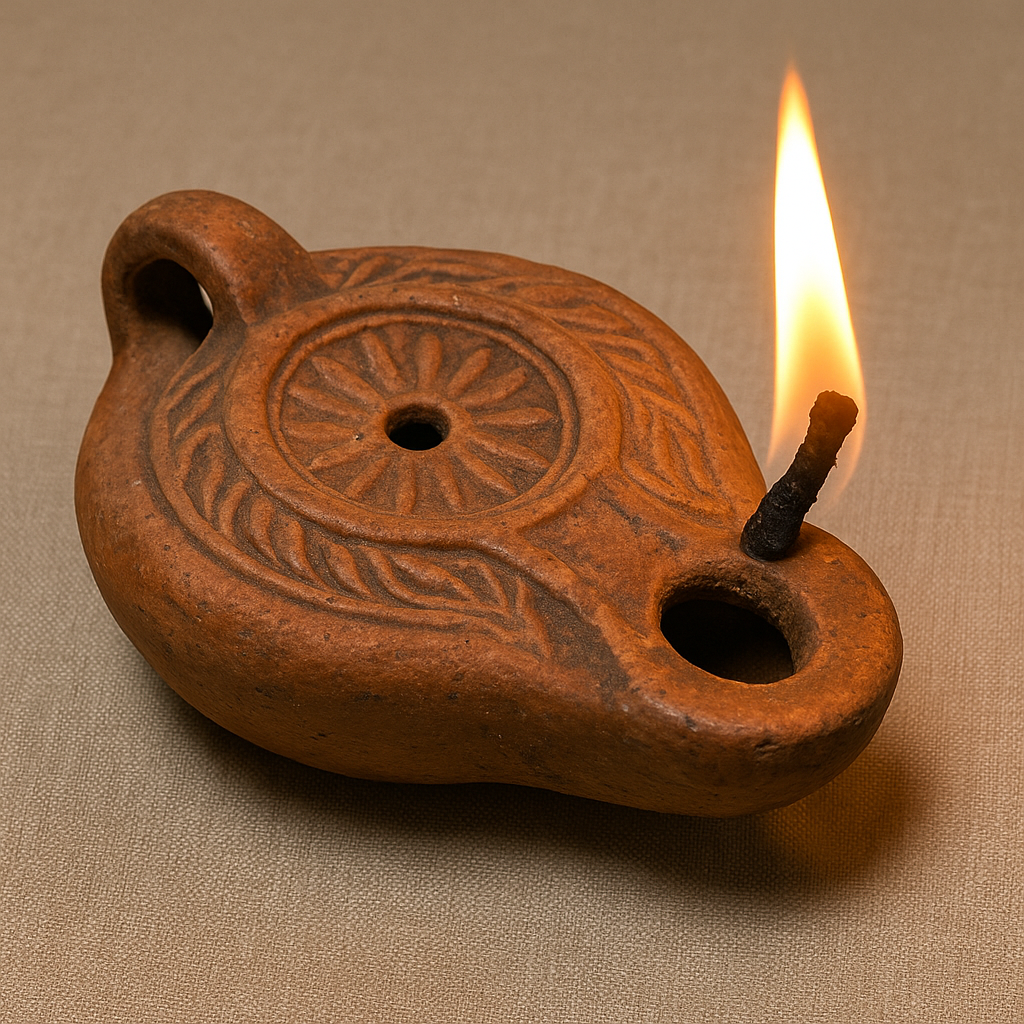
The Pattern of the Watchers
Yahushua repeatedly commanded His disciples: “Watch!”
This was not a vague command to be alert, but a specific instruction rooted in the calendar — to watch for the signs of the new moon, the changing of the appointed seasons, and the fulfillment of prophecy written in the heavens.
Each moed begins when the watchmen on the walls of Jerusalem sighted the first light of the renewed moon and declared it with the blast of the shofar.
Those who watched were blessed — those who slept missed the moment.
In the same way, the final generation must be watchers — not just of world events, but of Yahuwah’s heavenly timepiece.
When the trumpet sounds again — not at random, but at the appointed time — only the faithful who walk in His rhythm will recognize its call.
The Faithful Know the Season — Not the Slumbering
Paul closes the mystery plainly:
“For when they say, ‘Peace and safety!’ then sudden destruction comes upon them, as labour pains upon a pregnant woman.
And they shall not escape.”
— 1 Thessalonians 5:3
The world walks by Rome’s calendar and man’s feasts.
The faithful walk by the lights Yahuwah appointed in Genesis 1:14.
They do not guess His timing — they discern it.
They are not alarmed by the trumpet — they have been waiting for it.
They are not surprised by the Bridegroom — they are ready, having kept oil in the long night.
This is the dividing line between the wise and the foolish, between the sleeping and the awake, between those overtaken and those prepared.
The Bride who watches His calendar will not be caught unaware when He comes — for she has been living in His rhythm all along.
V. The Prophetic Count – 1,260, 1,290, and 1,335 Days to the Harvest
From the moment the trumpet sounds, Scripture begins to count.
Every appointed time — every moed — unfolds according to the divine measure Yahuwah set in the heavens.
The prophets Daniel and John both give us the same scale: a prophetic year of 360 days, twelve months of thirty days each.
This is not coincidence — it is confirmation.
When the end-time sequence begins, Yahuwah’s timepiece starts ticking again — perfectly synchronized with the same rhythm seen in Genesis, Noah, and Revelation.
It is the countdown to the final harvest.
Daniel’s Sealed Prophecy – The Clock of the End
The prophet Daniel was told that his vision of days and years would remain sealed “until the time of the end” — when knowledge would increase and the wise would understand (Daniel 12:4, 9–10).
He was not speaking of random numbers. He was describing a precise pattern of time — the restoration of Yahuwah’s calendar.
“And one said… ‘It shall be for a time, times, and half a time; and when the power of the holy people has been completely shattered, all these things shall be finished.’”
— Daniel 12:7
A “time, times, and half a time” — that is 3½ prophetic years, or 1,260 days.
The same period is echoed in Revelation:
“The holy city shall be tread underfoot forty-two months.” (Revelation 11:2)
“And I will give power unto my two witnesses, and they shall prophesy one thousand two hundred and sixty days.” (Revelation 11:3)
“The woman fled into the wilderness… for a time, times, and half a time.” (Revelation 12:6, 14)
Every measure aligns perfectly — 42 months × 30 days = 1,260 days = 3½ years.
That is the first count — the time of tribulation, the refining of the saints before the harvest.
From Trumpets to Passover – The 1,290-Day Pattern
Daniel is then told something remarkable:
“And from the time that the daily sacrifice is taken away, and the abomination that maketh desolate is set up, there shall be one thousand two hundred and ninety days.”
— Daniel 12:11
That extra 30 days is not random — it represents one complete biblical month.
If the 1,260 days mark the span from the Feast of Trumpets (1st day, 7th month) to the start of the new year (1st day, 1st month), then 30 days later — at 1,290 days — we arrive at the close of the first month.
This month contains Passover, Unleavened Bread, and First Fruits — the moedim of deliverance and resurrection.
It is here that judgment transitions into redemption. What was sown in tribulation now begins to ripen toward the final harvest.
Thus, the 1,290-day mark identifies the completion of the first cycle — the season of cleansing and restoration, pointing forward to the great ingathering yet to come.
The Blessed Who Wait – 1,335 Days to the Harvest
Daniel’s final statement completes the timeline:
“Blessed is he who waits, and comes to the one thousand three hundred and thirty-five days.”
— Daniel 12:12
This final 45-day span beyond the 1,290 reaches the moment of blessing — the day of fullness, the appointed time of Harvest.
When we measure this prophetically, counting from Trumpets (1st day, 7th month):
- 1,260 days → brings us to the 1st day of the 1st month (the start of a new year).
- 1,290 days → adds one complete month (30 days), reaching the end of the 1st month, where Passover and First Fruits have been fulfilled.
- 1,335 days → adds 45 days more, bringing us to the 16th day of the 3rd month — the Appointed Time of Harvest (Chag HaKatzir), also known as Shavuot (Pentecost).
At that point, the wheat — representing the mature believers, the perfected Bride — is gathered.
The harvest of the earth is reaped (Revelation 14:15–16). This is the culmination of all moedim — the appointed time of completion.
Three Witnesses – Daniel, Leviticus, and Jubilees
The Torah establishes truth by the witness of two or three (Deuteronomy 19:15), and Yahuwah gives us exactly that.
Daniel, Leviticus, and the Book of Jubilees all bear witness to this same timing.
Leviticus 23:16 says:
“16 Count to the fiftieth day, to the day after the seventh Sabbath…”
— Leviticus 23:16
That fiftieth day is the same day that Daniel’s 1,335 count leads us to — the day of harvest.
Deuteronomy 16:9–10 repeats the command to count seven Sabbaths complete, then keep the Feast of Weeks (Shavuot) as the offering of the wheat harvest.
Jubilees 1:1, 15:1, 16:13 and 44:5,8 confirm this reckoning, identifying the same third month, on the 16th day, as the appointed time of harvest — the day of covenant renewal and blessing.
Exodus 19:1-3 also states that the children of Israel came into the land where He dwelt on Mt. Sinai on the 16th day of the third month (For that was the day they left the land of Egypt) .
“In the third month after the children of Israel had gone out of the land of Egypt, on the same day they came to the Wilderness of Sinai… and Moses went up to Elohim.”
– Exodus 19:1-3
Thus all witnesses — Moses (Leviticus), Daniel (the prophet), Exodus and Jubilees (the ancient record) — agree precisely when measured by Yahuwah’s true calendar.
Why Only His Calendar Reveals the Pattern
None of this aligns on Rome’s Gregorian system. Only when the Creator’s calendar is used — lunar-solar, with visible new moons and Sabbaths marked by His signs — do all three witnesses converge perfectly.
This is why the world cannot see it. They count by man’s clock, not heaven’s. They see confusion where Yahuwah has written harmony.
But for those who walk in His rhythm, the pattern shines clearly.
Trumpets Sound at Every Major Event
The shofar sounds throughout the entire redemptive plan:
- It sounds at Sinai, when Yahuwah descended (Exodus 19:16–19).
- It sounds at Jericho, when the walls fell (Joshua 6:20).
- It sounds in prophecy, when the watchmen warn (Joel 2:1).
- It sounds again in Revelation, when the kingdoms of this world become His (Revelation 11:15).
The trumpet is not confined to a single feast — it is the herald of every turning point.
From Noah’s ark to the final harvest, the blast declares the same truth:
Yahuwah is moving — prepare the field.
The Count of the Redeemed
The 1,335 days are not random arithmetic — they are the measure of Yahuwah’s mercy and precision. Those who endure that count are called blessed, because they have waited through the refining, obeyed through the testing, and are gathered at the time of joy.
The harvest is not sudden; it is appointed.
“Blessed are those servants whom the Master, when He comes, will find watching.”
— Luke 12:37
VI. The Witnesses of Jubilees – The Harmony of the Moedim
In the mouth of two or three witnesses every word shall be established.
— Deuteronomy 19:15
Yahuwah never leaves His pattern without testimony.
He confirms His timing through the Torah, the Prophets, and the Writings — and through ancient records like the Book of Jubilees, which preserves the heavenly reckoning of His appointed times.
When studied alongside Daniel’s 1,260–1,290–1,335 day prophecy, Jubilees reveals a perfect harmony — the same divine rhythm governing creation, covenant, and completion.
The Heavenly Calendar Restored
Jubilees warns that men would corrupt the reckoning of the times — following the sun and forgetting the moon, causing the appointed times to fall out of season:
“They will forget the new moons, and seasons, and Sabbaths, and they will go wrong as to all the order of the years.”
— Jubilees 6:36–37
This aligns exactly with Daniel 7:25, which prophesies that a great power — the fourth kingdom, the Roman system — would “think to change times and laws.”
The loss of Yahuwah’s calendar was not accidental; it was an act of war against His covenant order.
The Moedim Recorded in Jubilees
Throughout Jubilees, the appointed times are detailed with extraordinary precision — and every one of them aligns with the pattern given in Torah:
- Passover (Pesach): 14th day of the 1st month (Jubilees 49:1–2; cf. Leviticus 23:5)
- Feast of Unleavened Bread (Chag HaMatzot): 15th–21st of the 1st month (Jubilees 49:1–9)
- Feast of First Fruits (Yom HaBikkurim): the day after the Sabbath following Unleavened Bread — the same day Yahushua rose, becoming “the firstfruits of them that slept” (1 Corinthians 15:20).
- Feast of Weeks (Shavuot / Appointed Time of Harvest): 16th day of the 3rd month — the day when the wheat harvest was offered and the covenant renewed (Jubilees 15:1; 44:4–5).
- Trumpets, Atonement, and Tabernacles: the seventh-month festivals, marking the warning, the cleansing, and the final dwelling of Yahuwah with His people (Jubilees 32:27–29).
This record confirms that Yahuwah’s moedim have been consistent from the days of Noah and Abraham to the giving of the Torah and beyond.
They were not created for Israel alone — they are the divine appointments of creation itself.
The Day of Covenant and Renewal
Jubilees adds a vital detail absent from later corruptions of the calendar — it identifies Shavuot (the Feast of Weeks) as not merely a harvest festival, but the Day of Covenant Renewal:
“And he [Abraham] kept this feast every year for seven days in joy… because it is the feast of the covenant which Yahuwah made with him to eat before Yahuwah year by year.”
— Jubilees 15:1–4
It was on this same day — the 16th of the third month — that:
- Noah offered sacrifices after the flood (Jubilees 6:17–21)
- Abraham renewed the covenant of circumcision (Jubilees 15:1–4)
- Israel received the Torah at Mount Sinai (Jubilees 1:1; Exodus 19:1)
- The Spirit was poured out in Jerusalem (Acts 2:1–4)
Each event marks a renewal of covenant between Heaven and Earth, and every one falls on the same appointed time — the day of harvest.
This is the day Daniel’s count leads to — 1,335 days from Trumpets, when the faithful who endure are called “blessed.”
Three Witnesses — One Calendar
When we place the witnesses together, the precision is astonishing:
| Witness | Count / Timing | Moed | Description |
|---|---|---|---|
| Leviticus 23:15–21 | Seven Sabbaths complete from the end of Unleavened Bread | Shavuot (Pentecost) | The offering of the wheat harvest |
| Daniel 12:11–12 | 1,290 + 45 = 1,335 days | Appointed Time of Harvest | The blessing for those who endure |
| Jubilees 15 & 44 | 16th day of the 3rd month | Feast of Covenant Renewal | The same day of harvest and blessing |
Each witness describes the same event in different language — and each depends upon Yahuwah’s lunar-solar calendar for exact synchronization.
Why This Witness Matters Now
We are living in the time when Daniel’s sealed book is opening. Knowledge is increasing — not through technology alone, but through revelation of Yahuwah’s appointed times.
As the world follows artificial time, Heaven is calling a remnant back to the rhythm written in the stars. Jubilees warned that men would lose track of the seasons and “walk according to the years of the nations.”
That time has come.
But the restoration of His calendar is also underway — among those who hear the trumpet, keep the Sabbaths, and watch for the new moon.
These are the ones described in Daniel 12:10:
“Many shall be purified, and made white, and tried; but the wicked shall do wickedly: and none of the wicked shall understand; but the wise shall understand.”
To understand is not to calculate endlessly — it is to walk in step with Yahuwah’s appointments.
The wise will not be surprised when the harvest comes; they will already be standing in the field, lamps trimmed, oil full, counting the days in obedience.
VII. The Trumpets Throughout Scripture – Announcing Every Major Move of Yahuwah
From the beginning, the trumpet — the shofar — has never been just a sound. It is the voice of Yahuwah in motion.
It marks the moments when Heaven breaks into Earth, when the unseen becomes visible, when the appointed time arrives.
Each blast in Scripture heralds a divine movement — an announcement that Yahuwah is acting, judging, revealing, or restoring.
The trumpet is the thread that ties together creation, covenant, and completion.
Sinai – The Trumpet of Covenant
The first trumpet humanity ever heard came at Mount Sinai, when Yahuwah descended in fire to make covenant with Israel:
“And it came to pass on the third day in the morning, that there were thunders and lightnings, and a thick cloud upon the mount, and the voice of the trumpet exceeding loud; so that all the people that was in the camp trembled.”
— Exodus 19:16
This trumpet was not blown by human hands — it was Heaven declaring its authority. It was the sound of law, order, and revelation, the moment the commandments were spoken. The mountain shook, the people trembled, and the covenant was sealed in sound.
It is no coincidence that the shofar at Sinai corresponds to the trumpet of Yom Teruah — a memorial of that very moment when the King’s voice first thundered from the cloud.
Jericho – The Trumpet of Victory and Judgment
When Israel crossed the Jordan into the Promised Land, the trumpet led them again.
The walls of Jericho fell not by might, but by obedience — by the sound of the shofar at the appointed time:
“So the people shouted when the priests blew with the trumpets… and it came to pass, when the people heard the sound of the trumpet, that the wall fell down flat.”
— Joshua 6:20
The trumpet was not a war cry — it was a judgment signal. The same voice that ordered creation and delivered the covenant now tore down the walls of rebellion. Yahuwah’s trumpet always divides — between obedience and defiance, between the faithful and the fallen.
The Prophets – The Trumpet as Warning
The prophets continued the pattern, crying aloud like trumpets to a deaf and complacent people.
Isaiah was commanded:
“Cry aloud, spare not; lift up your voice like a trumpet; show My people their transgression.”
— Isaiah 58:1
Joel declared:
“Blow the trumpet in Zion, and sound an alarm in My holy mountain! Let all the inhabitants of the land tremble, for the day of Yahuwah is coming.”
— Joel 2:1
In every generation, the trumpet stands as Yahuwah’s alarm clock — awakening His people before judgment falls. When men stop hearing His voice through the Word, He sends the blast through warning.
When they stop responding to the warning, He sends the blast through shaking.
The Psalms – The Trumpet of Worship and Reign
The trumpet also marks worship — the sound of recognition that Yahuwah reigns.
“With trumpets and the sound of a shofar make a joyful noise before Yahuwah the King.”
— Psalm 98:6
Here, the trumpet is not warning but proclamation — the sound of allegiance and victory. It is the same sound that will one day announce the coronation of Yahushua as King of Kings. Every trumpet in Scripture, whether warning or worship, leads toward that moment.
Revelation – The Final Trumpets of Completion
In the book of Revelation, the trumpet once again takes centre stage. Seven angels stand before Yahuwah, each given a trumpet. With each blast, Heaven’s decrees are executed upon the earth — not randomly, but in perfect order, as each moed is fulfilled.
The seventh trumpet brings the final announcement – the coronation of the King:
“And the seventh angel sounded; and there were great voices in heaven, saying,
‘The kingdoms of this world have become the kingdoms of our Master and of His Messiah; and He shall reign forever and ever.’”
— Revelation 11:15
This is the same voice that sounded at Sinai, that felled Jericho’s walls, that spoke creation into being. It is the sound of Yahuwah reclaiming what is His.
The Trumpet in the Life of the Believer
Today, that trumpet still calls — not through angels or clouds, but through the Ruach (Spirit) awakening hearts to repentance, obedience, and restoration.
When we turn from man’s calendars, man’s commandments, and man’s traditions, and return to the moedim of Yahuwah, we are responding to the trumpet.
Every blast is a reminder:
- To awake from slumber (Romans 13:11).
- To prepare our lamps (Matthew 25:7).
- To return to His order (Isaiah 58:13–14).
The sound is both invitation and warning — the same voice that thundered at Sinai now whispers to His Bride: “Come out of her, My people.”
A Continuum, Not a Single Day
The trumpet does not belong to a single feast. It resounds through every major act of redemption — creation, covenant, judgment, restoration, resurrection. It blows at the beginning of things and at their completion. Yahuwah’s trumpet is the heartbeat of His timeline.
To limit it to one moed is to miss its message entirely. Every appointed time begins with the sound of the shofar — the alarm, the awakening, the call to assemble before the Sovereign of Time.
The Trumpet and the Harvest
And at last — when the 1,335th day arrives — the trumpet will sound again. Not to warn, not to shake, but to gather:
“And He shall send His angels with a great sound of a trumpet, and they shall gather together His elect from the four winds.”
— Matthew 24:31
That final blast will not surprise the wise — for they have heard every trumpet before it and answered its call. They will not be caught unaware, for they have walked in His timing all along.
When that shofar sounds, they will recognize the voice — the same voice that spoke in the beginning, the same voice that called them out of Babylon, the same voice that said, “Follow Me.”
VIII. The Restoration of Time – Returning to the Creator’s Clock
When Yahuwah created the heavens and the earth, He did not leave time to human invention.
He established a perfect rhythm — a clock of light — written into the very fabric of creation.
“Let there be lights in the firmament of the heaven to divide the day from the night; and let them be for signs, and for appointed times, and for days and years.”
— Genesis 1:14
From that moment, time was sacred. The sun, moon, and stars became the unalterable witnesses of His covenant. They were not decorations of the sky; they were instruments of divine order — the way Heaven speaks to Earth.
The Promise of Restoration
Through the prophet Isaiah, Yahuwah declared that He would not leave His creation in confusion forever:
“I will restore thy judges as at the first, and thy counsellors as at the beginning: afterward thou shalt be called,
The city of righteousness, the faithful city.”
— Isaiah 1:26
And again:
“Many shall run to and fro, and knowledge shall increase.”
— Daniel 12:4
This increase of knowledge is not about science or technology — it is the awakening of divine understanding, the rediscovery of Yahuwah’s calendar, His moedim, and His covenant signs.
We are living in that time now.
Why This Restoration Matters
This is not about “calendar debates” or mere academic curiosity. It is about obedience. The moedim are appointments — divine meetings. To follow the wrong calendar is to miss the appointment entirely.
It is like arriving at the King’s court on the wrong day — dressed, ready, sincere, but absent when He called. Remember the Virgins.
Yahuwah’s people are being called back to His clock because time itself is running out. The shortening of days spoken by Yahushua — “except those days should be shortened, no flesh would survive” (Matthew 24:22) — is not only about tribulation but about synchronization.
He is realigning the world to His 360-day rhythm — the measure by which the 1,260, 1,290, and 1,335 days will unfold.
Those who do not know His clock will not discern the moment of His visitation. But those who keep His moedim, who watch the heavens, will know when the harvest is near.
The Repairers of the Breach
Isaiah 58 foretold this very work:
“And they that shall be of thee shall build the old waste places:
thou shalt raise up the foundations of many generations;
and thou shalt be called,
The Repairer of the Breach,
The Restorer of Paths to Dwell In.”
— Isaiah 58:12
What breach?
The breach in time — the fracture of Yahuwah’s calendar. To repair it is to restore the Sabbath to its rightful place, to realign worship with Heaven’s rhythm, and to walk again in the pattern He ordained “from the beginning.”
This is not a movement of religion but of restoration. It is the call of the Bride — awakening, trimming her lamp, and keeping time with the Bridegroom.
The Last Alarm
The trumpet has sounded — not for entertainment, but for awakening. Yahuwah is reclaiming His calendar, His moedim, His time. The same Spirit that hovered over the waters in Genesis is now hovering over the nations, preparing the final harvest.
Those who return to His order will find peace in chaos, rhythm in confusion, and blessing in obedience. But those who cling to man’s order will find themselves out of step when the final trumpet sounds.
This is not about the past — it is about survival. For when the 1,335th day dawns, it will not be a surprise to those walking in His light. They will already be there — gathered, counted, sealed — right on time
IX. The Bride and the Clock – A Call to Prepare for the Final Harvest
The final message of time is not mathematical — it is marital.
It is not about calculation but covenant.
The restoration of Yahuwah’s calendar is the final act of preparation for the wedding of the Lamb.
Throughout Scripture, the relationship between Yahuwah and His people is pictured as a marriage.
The moedim are not mere festivals — they are rehearsals for the wedding day.
Each one reveals a stage in the covenant love story between the Bridegroom and His Bride.
When His people lost His time, they lost the rhythm of that relationship. But now, as His clock is restored, the Bride begins to move once again to the heartbeat of her Husband.

The Final Harvest – The Bridegroom Comes
At the appointed time, the sequence will complete.
The trumpet will sound — not as warning, but as invitation.
“And the angel thrust in his sickle on the earth, and gathered the vine of the earth.”
— Revelation 14:19
The harvest has two parts — the barley and the wheat — just as the Bride and the guests are distinct.
The barley — representing those who rise at First Fruits — is harvested first, early and tender.
The wheat — representing those refined through tribulation — ripens at Shavuot, the appointed time of the harvest.
The Bride is ready at the barley harvest; the guests are gathered at the wheat harvest.
Both are precious, but one is prepared sooner because she watched His time.
X. The Conclusion – The King’s Return and the Restoration of All Things
From Genesis to Revelation, time has always been sacred. It was the first thing Yahuwah ordered, the structure upon which all creation rests. And it will be the last thing He restores before the Kingdom is revealed in full.
This series has been a journey — through the rise, the loss, and the rediscovery of Yahuwah’s time. We have traced His clock from Eden’s light to the fractured calendars of men, from the trumpets of Sinai to the final shofar of Revelation.
And through it all, one truth remains unbroken:
Time belongs to Yahuwah — and His people are called to walk by His measure, not man’s.
The Message of All Ten articles: Time Is Covenant
When you strip away the centuries of confusion, the message is simple and eternal:
Time is the language of covenant.
Yahuwah’s appointments are not random — they are vows.
Every Sabbath is a renewal of relationship.
Every feast is a milestone in the marriage between Heaven and Earth.
Every new moon is a whisper from the Bridegroom: “Watch for Me. I am coming soon.”
Those who walk by His time will be ready when He returns — not because they calculated the day, but because they stayed in rhythm with His heart.
The King’s Return – The Restoration of All Things
When Yahushua returns, He will not come to fit into man’s schedule. He will come to restore the original order of creation.
Peter spoke of this restoration:
“Whom heaven must receive until the times of restitution of all things,
which God hath spoken by the mouth of all His holy prophets since the world began.”
— Acts 3:21
This restitution includes time itself — the return of the 360-day year, the visible moons, the Sabbaths restored, and the moedim celebrated from new moon to new moon and Sabbath to Sabbath (Isaiah 66:23).
Creation will once again keep time with its Creator. The Bride will walk with the Bridegroom, not behind Him. And the whole earth will move to the beat of His voice.
The Final Call
The call now is simple, yet eternal:
Return to His time.
Watch His sky.
Guard His Sabbaths.
Keep His moedim.
Trim your lamp.
Keep your oil.
And wait for the sound of the final trumpet.
For the King is returning — and this time, He will not correct the clock again.
He will set it forever.
References
Creation and the Original Calendar
- Genesis 1:14–18 — The sun, moon, and stars appointed for signs, seasons (moedim), days, and years.
- Genesis 7:11, 24; 8:4 — Five months = 150 days, establishing a 30-day month and 360-day year.
- Revelation 11:2–3; 12:6, 14; 13:5 — 42 months = 1,260 days, confirming the 360-day prophetic year.
Covenant and the Sign of Time
- Exodus 20:8–11 — The Sabbath commandment.
- Exodus 31:13–17 — The Sabbath as the covenant sign between Yahuwah and His people.
- Leviticus 23:1–44 — Full list of Yahuwah’s appointed times (moedim).
- Numbers 10:10 — Trumpets sounded over Sabbaths and feasts.
- Deuteronomy 16:1–17 — Observance of Passover, Weeks (Shavuot), and Tabernacles.
- Isaiah 66:23 — From one new moon to another and one Sabbath to another, all flesh will worship before Yahuwah.
Rebellion and the Hiding of Time
- Hosea 2:11 — Yahuwah causes the feasts, new moons, and Sabbaths to cease because of unfaithfulness.
- Isaiah 24:1–6 — The earth defiled because they “changed the ordinance” and “broken the everlasting covenant.”
- Jeremiah 17:21–27 — Judgment pronounced for profaning the Sabbath.
- Ezekiel 20:12–13, 16 — The Sabbath given as a sign; rebellion and defilement follow.
- Daniel 7:25 — The little horn power will “think to change times and laws.”
- Lamentations 2:6 — Yahuwah causes Sabbaths and appointed times to be forgotten in Zion.
- Leviticus 26:14–35 — Disobedience to Sabbaths leads to exile; the land will enjoy its Sabbaths.
- 2 Chronicles 36:20–21 — The land kept its Sabbaths during Israel’s exile.
Prophecy and Restoration
- Daniel 12:4, 7, 11–12 — Sealed prophecy; 1,260, 1,290, and 1,335 days until the end.
- Matthew 24:22 — The days shortened for the elect’s sake.
- Mark 13:20 — “Unless the Lord had shortened those days, no flesh would be saved.”
- Acts 3:21 — The restitution (restoration) of all things before the return of Messiah.
- Revelation 14:12–16 — The saints keep commandments and faith; the harvest of the earth is reaped.
The Two Harvests: Barley and Wheat
- Leviticus 23:9–14 — The Feast of First Fruits (Yom HaBikkurim), the barley harvest.
- 1 Corinthians 15:20–23 — Messiah as “the firstfruits of them that slept.”
- Matthew 27:52–53 — Saints raised and seen after His resurrection.
- Leviticus 23:15–21; Deuteronomy 16:9–10 — Count seven Sabbaths from the end of Unleavened Bread to Shavuot (Pentecost), the wheat harvest.
- Acts 2:1–4 — The Spirit poured out at Shavuot.
- Matthew 13:39–43 — “The harvest is the end of the age.”
- Joel 3:13 — “Put in the sickle, for the harvest is ripe.”
- Revelation 14:15–16 — The Son of Man reaps the harvest of the earth.
Trumpets, Judgment, and Awakening
- Leviticus 23:23–25; Numbers 29:1–6 — The command for the day of blowing trumpets.
- Joel 2:1 — “Blow the trumpet in Zion.”
- Amos 3:6 — “Shall a trumpet be blown and the people not be afraid?”
- 1 Thessalonians 4:16–17 — The trumpet of Elohim and the resurrection.
- 1 Corinthians 15:51–52 — The last trumpet, when the dead are raised.
- Matthew 25:1–13 — The parable of the ten virgins: watchfulness and readiness.
- 1 Thessalonians 5:1–6 — “You are not in darkness that that day should overtake you as a thief.”
- Matthew 24:37–39 — “As in the days of Noah, so shall it be.”
Atonement and Restoration
- Leviticus 16:29–34; 23:26–32 — The Day of Atonement (Yom Kippur), the day of affliction and atonement.
- Revelation 8:3–6 — Incense and intercession before judgment.
- Hebrews 9:11–28 — Messiah as our High Priest entering once for all.
- Ezekiel 9:4–6 — Marking the faithful before destruction.
- Revelation 20:11–15 — The Great White Throne judgment.
Tabernacles and the Kingdom Restored
- Leviticus 23:33–43 — The Feast of Tabernacles (Sukkot).
- Deuteronomy 16:13–17 — Rejoicing in the feast.
- John 7:2, 14, 37 — Yahushua teaching during Sukkot.
- Zechariah 14:16–19 — Nations required to keep Sukkot in the Kingdom.
- Revelation 21:3–4 — “The tabernacle of God is with men.”
The Restoration of the Sabbath and Moedim
- Isaiah 58:1–14 — The trumpet call to repentance, restoration of the Sabbath, and repair of the breach.
- Psalm 81:3–4 — “Blow up the trumpet in the new moon.”
- Ezekiel 46:1–3 — The gates open on the Sabbath and on new moons.
- Nehemiah 8:14–18 — Restoration of the Feast of Tabernacles after exile.
 The Calendar of Scripture
Thank you for this – excellent series. But you never mention the vintage or the gleaning grapes. How do these fit? Or do they not?
LikeLike
Hi Erica,
True. I’ll see what I can do in a future article. Thanks for the feedback.
LikeLike